
Morning Minute: October 26, 2018

Photo by Norah Burke 

Photo by Norah Burke 

Some Fun Things: Looking for Halloween fun? There’s plenty of fun for everyone!

  • Today, October 26 through Tuesday, October 30, the Matthews Playhouse is ready to scare you silly on the Haunted Trail! Each day from 6 until 7 PM things are on the tame side of terrifying, but from 7 PM until closing at 10 PM there's no telling how frightful things will get. Tickets are $7 for 12 years and under and $10 for 13 years and older.  Located on the Greenway Connector Trail behind the Community Center, 100 McDowell St East.   

  • Matthews Mojo Halloween Costume Run! Let’s cut to the chase, you’re going to eat a lot of candy. A LOT OF CANDY. Why not prep for Halloween by giving your costume a dress rehearsal and run on October 27 (8 AM til about 10 AM). Think of it as preemptively neutralizing the sugar?Post-run wind down with a (few?)  pumpkin beers and hang out with like-minded people.

  • Don’t forget the Town’s Not-So-Spooky Halloween and Pumpkin Carving Contest, this Saturday, October 27, from 5 PM to 9 PM in Stumptown Park. The evening starts with festive fun and will end with the movie “Halloweentown”.

  • Mount Moriah Church, 381 Crestdale Rd, is hosting a Trunk or Treat on Halloween with food and games. It’s open to everyone and costumes should be based on book characters. The festivities start at 6:30 PM and will go to 8:30PM.

  • If you don’t have kids and want something to do, Halloween Bike Night is the season-ender on October 31 at Kristopher’s (at the Corner of Matthews-Mint Hill Road & Trade Street). The fun starts at 6 PM and you’ll want to get there in time to see bikers arrive in costume.

#ThrowbackThursday: November 2, 2006

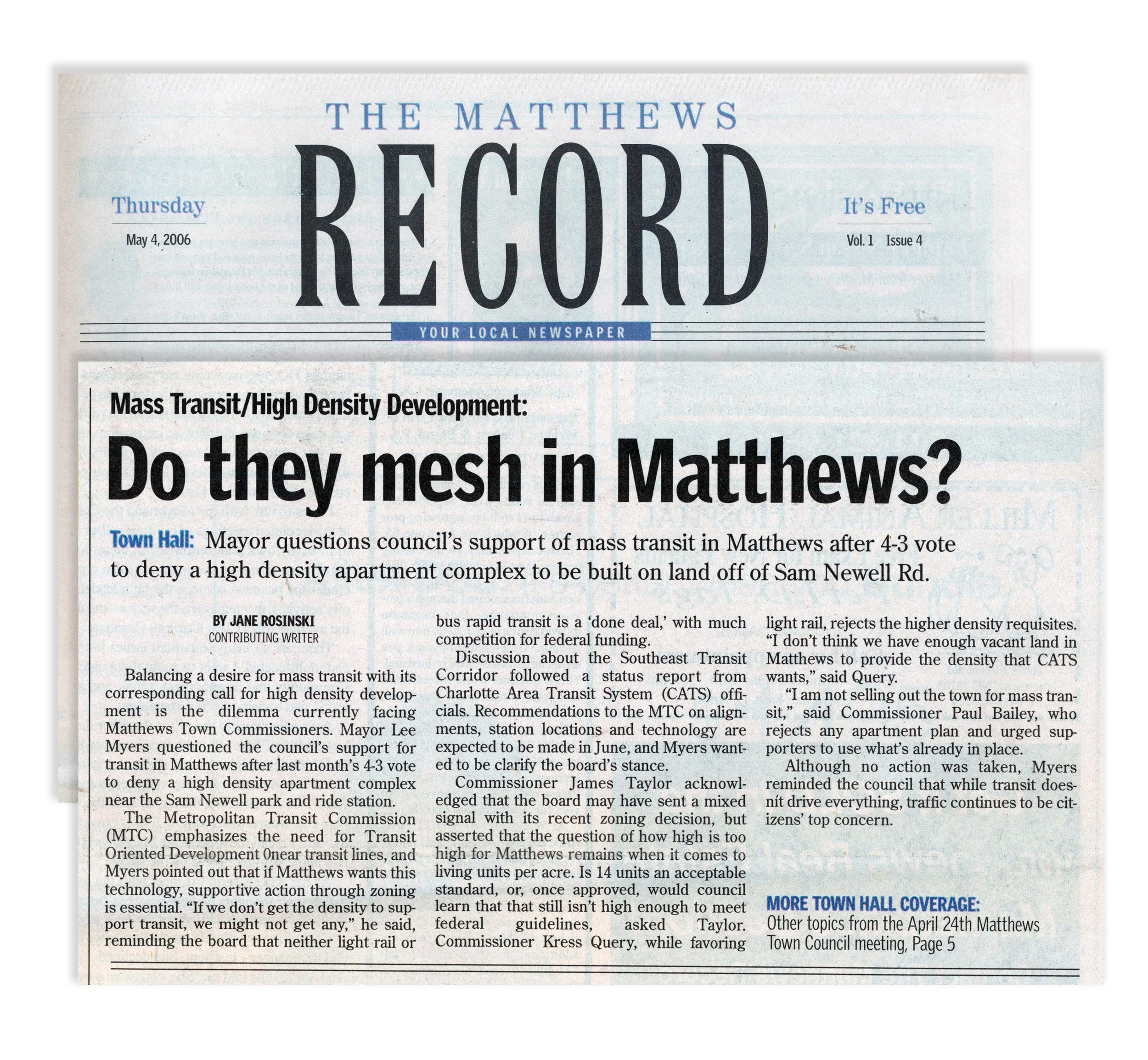
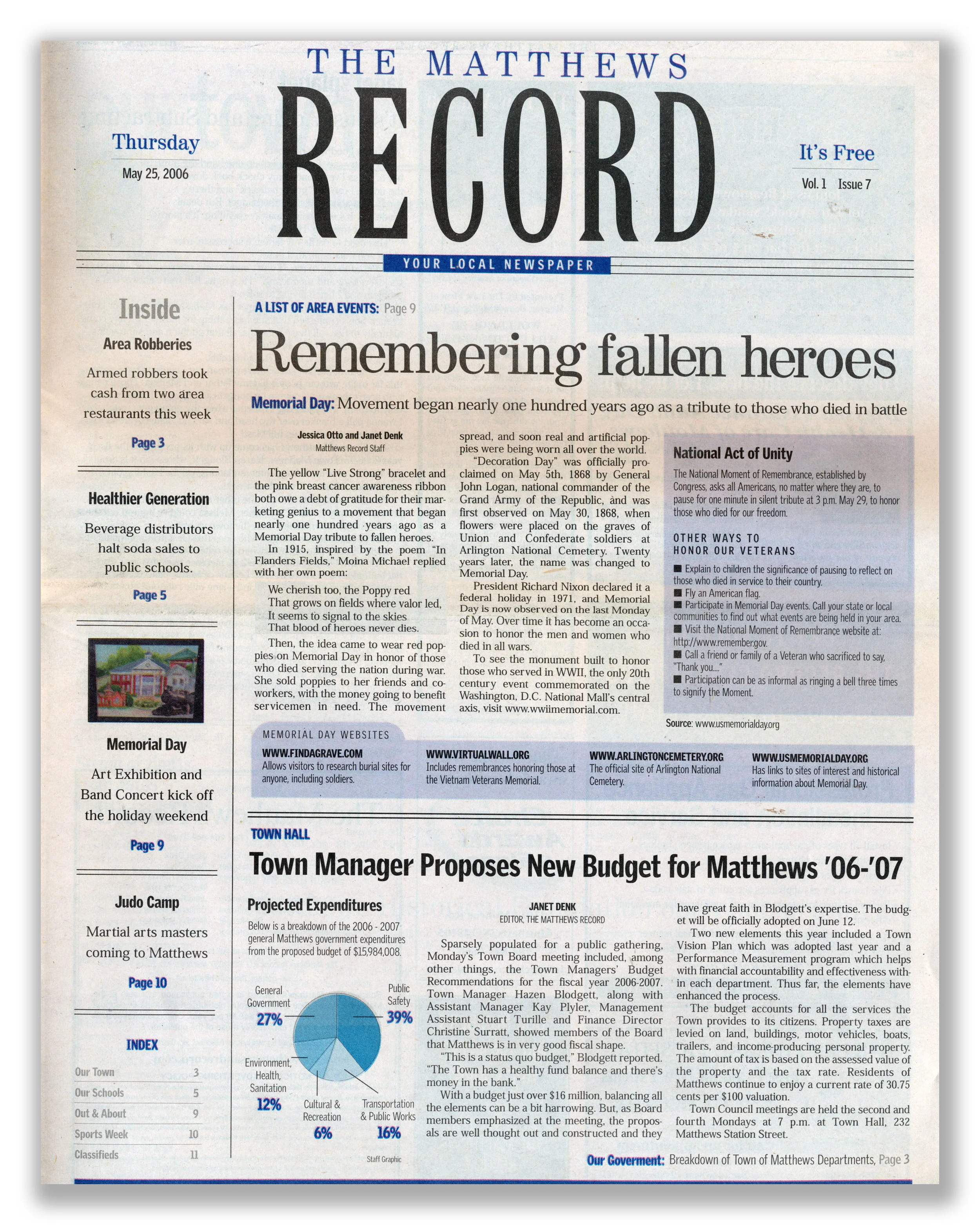
With permission, The Beacon is archiving past issues of Matthews Record (also called Matthews News and Record and The Matthews Record) articles online. Throwback Thursday articles will include relevant content still facing Matthews today. This article was originally published November 2, 2006 and was written by Janet Denk.

tbt november 2 2006.jpg

Not So Spooky: The Matthews Parks and Recreation Halloween festivities were not-so-spooky, but oh-so-fun. The third annual event was one of the largest, according to town officials, with over 500 participants - most of them in costumes strolling around under crystal clear skies.

The Many Faces of Buzzing Bugs

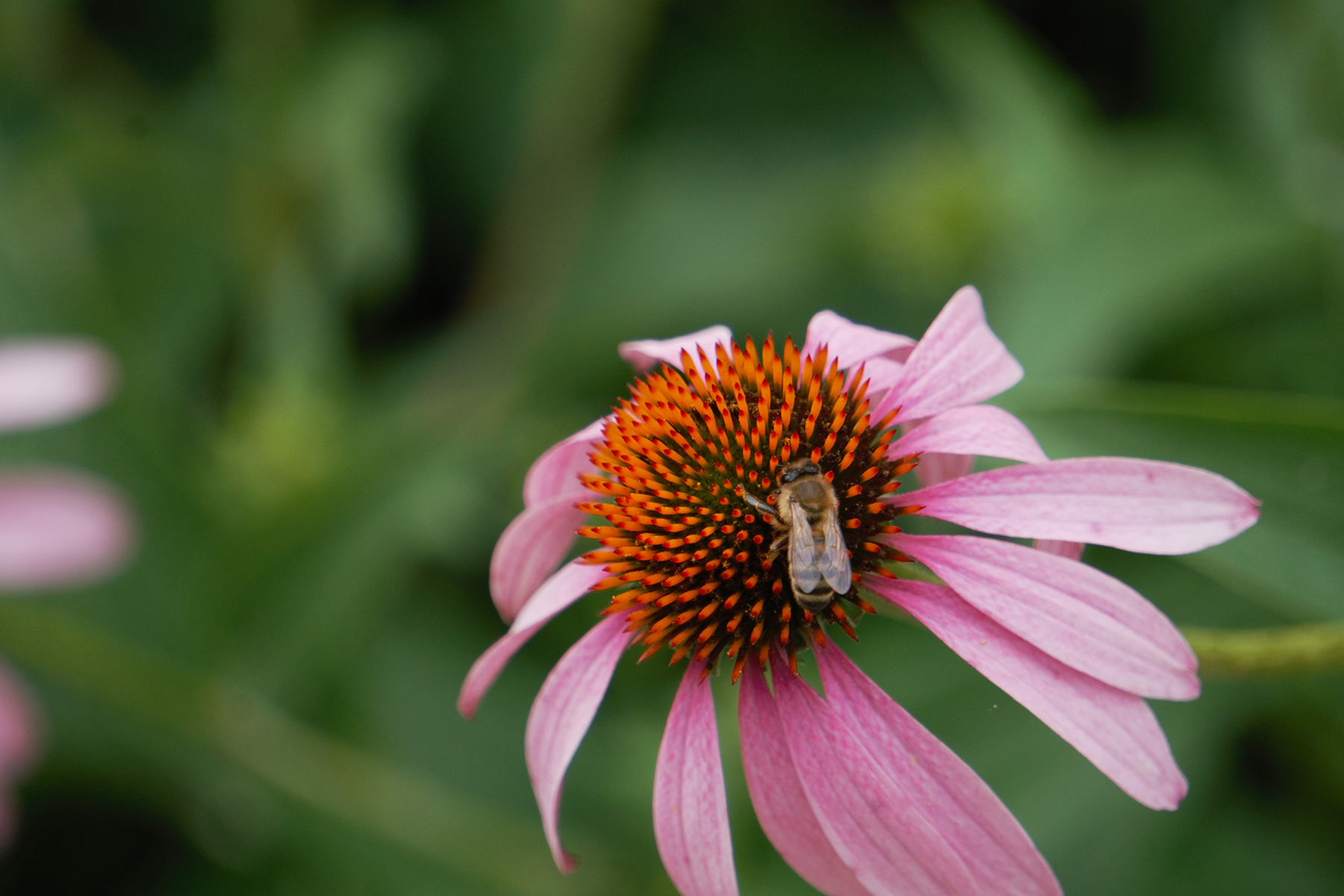
Photo by Debbie LeBlanc Foster

Photo by Debbie LeBlanc Foster

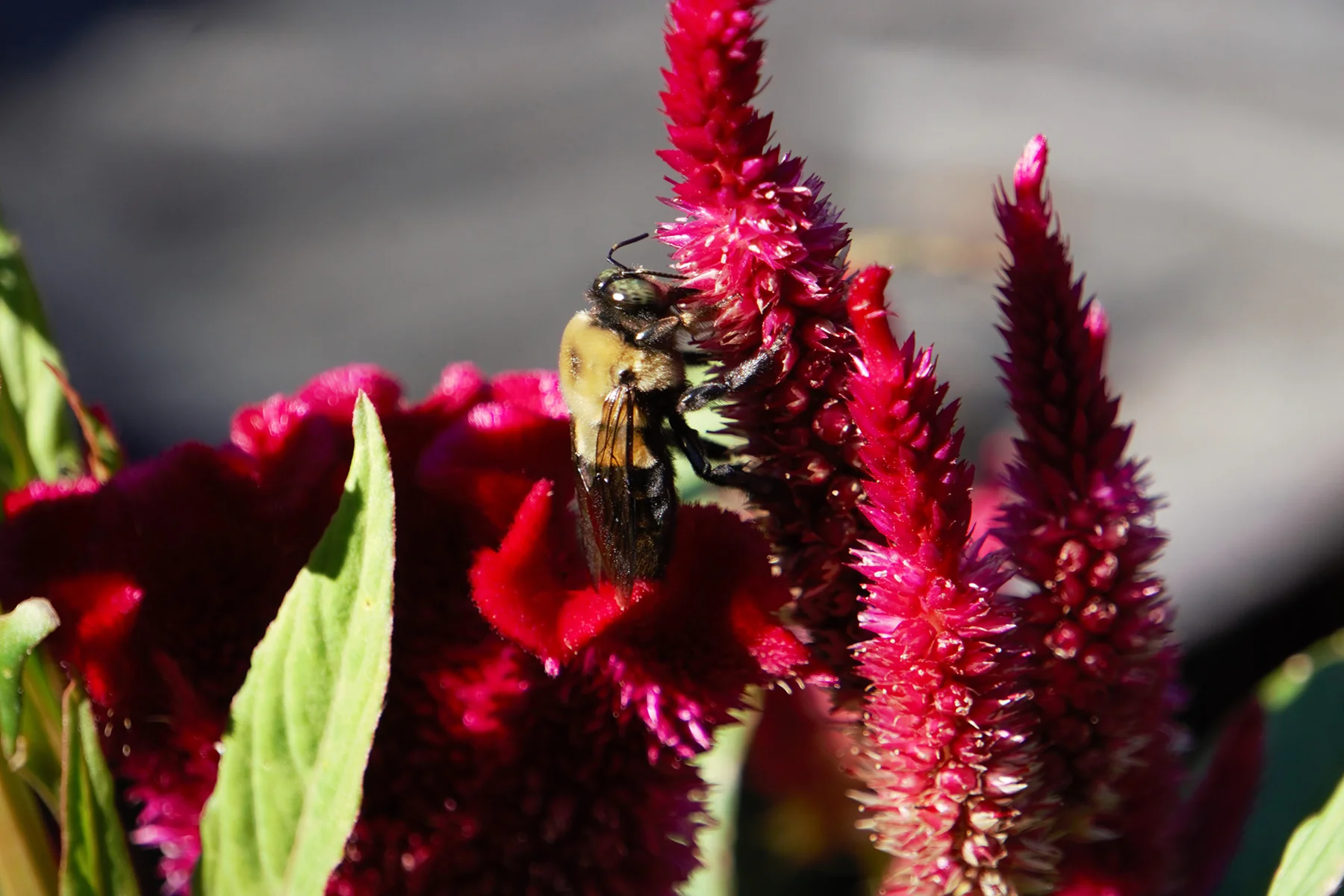
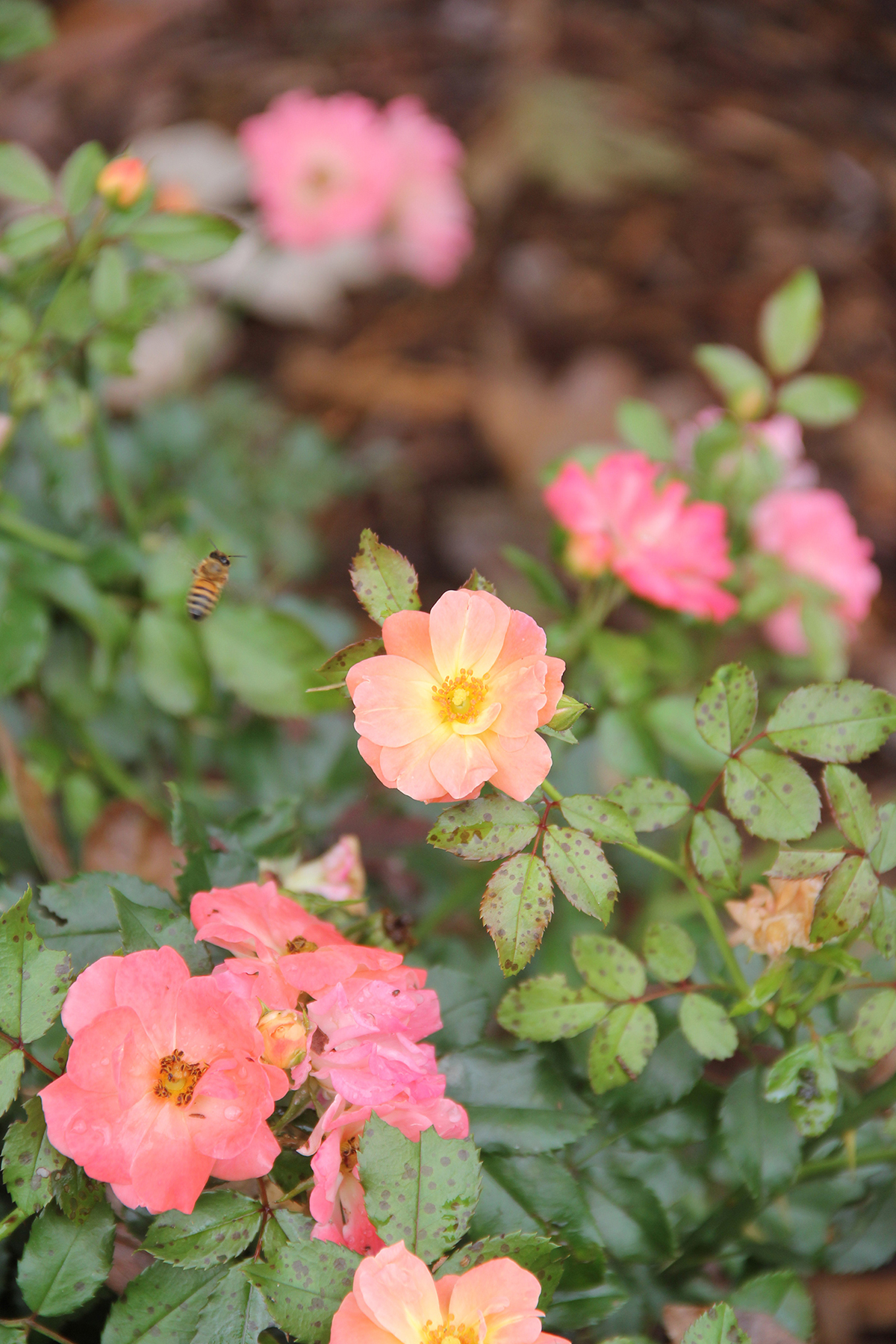
Bees, wasps, and hornets are amazing creatures!  They are hard workers, often pollinating our flowers and food crops.  We have more than 4,000 species in the US! Did you know that North Carolina is home to more than 500 species of native bees? That’s the good news.  The bad news is that many of our pollinators are at risk, with populations declining by more than 30%, according to Our State magazine.

Let’s look at a few of these buzzing bugs with interesting names,  and how you can make a pollinator-friendly habitat in your yard.

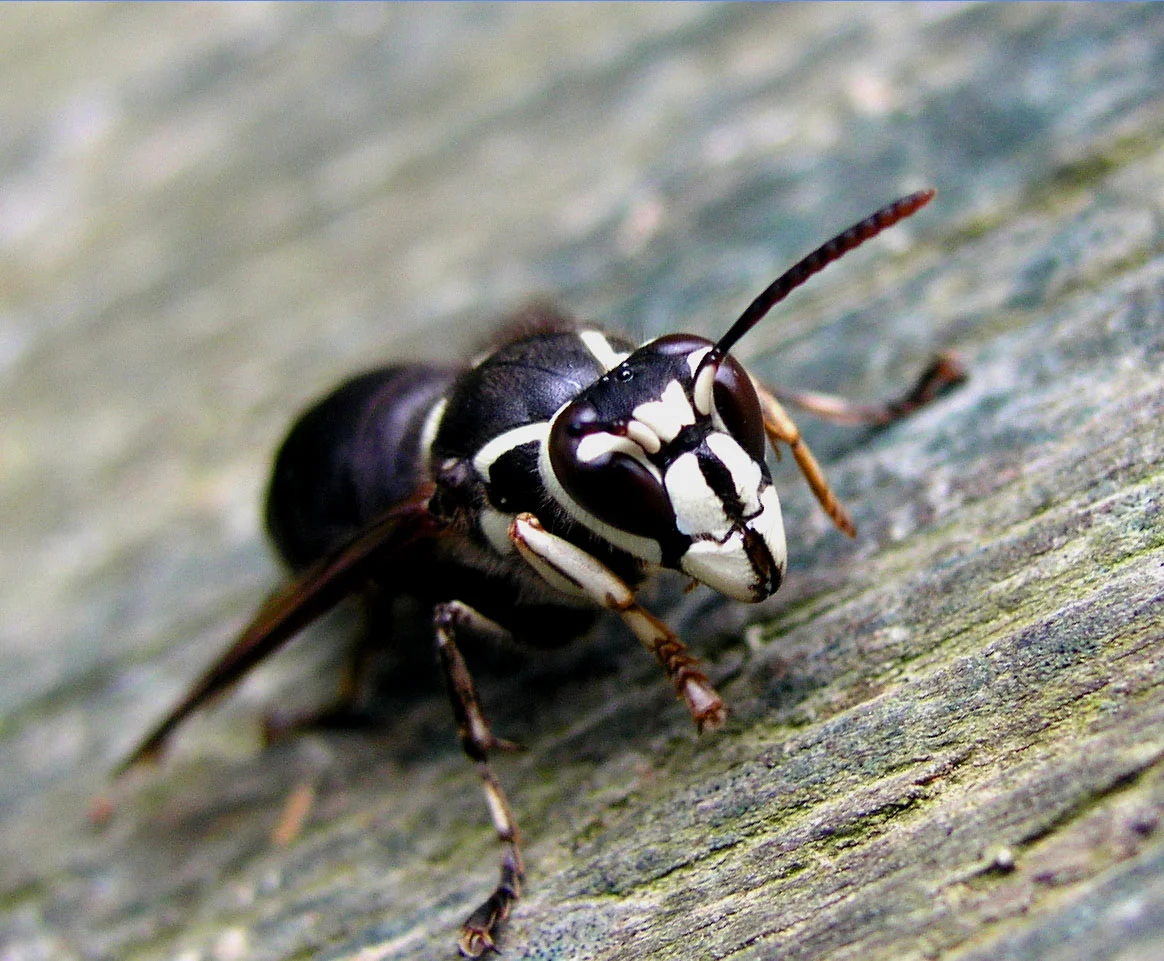
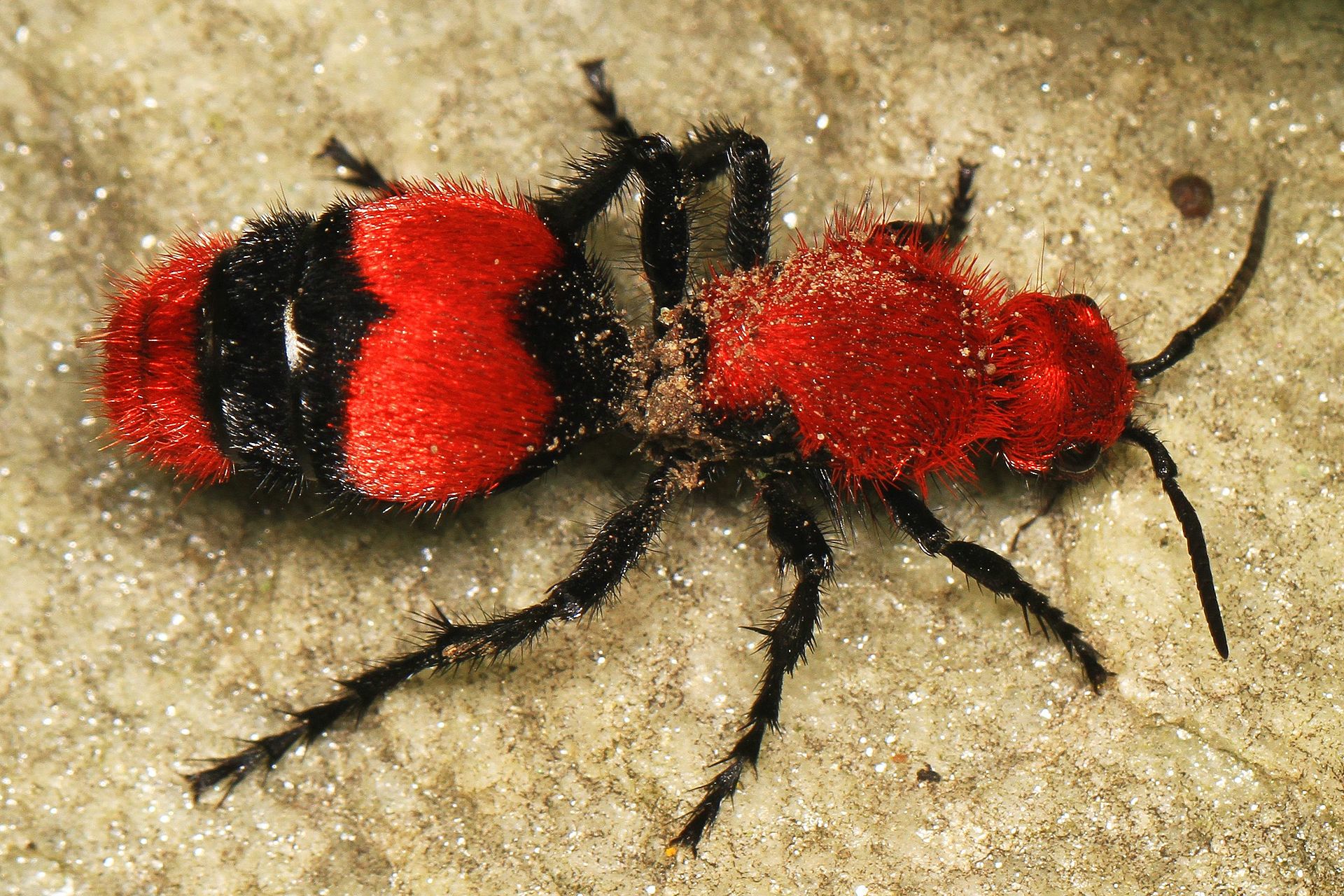
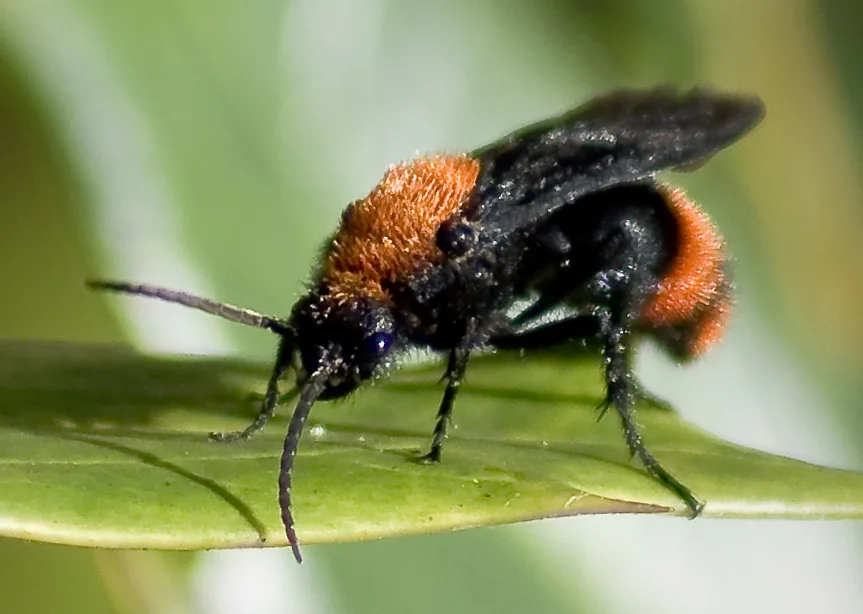
Ever seen a Bald-faced Hornet? How about a Blue-winged Wasp?  A Cow Killer? All of these can be found in NC.

The Bald-faced Hornet builds a bulbous nest that hangs  from a tree or shrub. Stay away from this one! These are aggressive hornets that can sting repeatedly.  Hire a professional to deal with a nest.

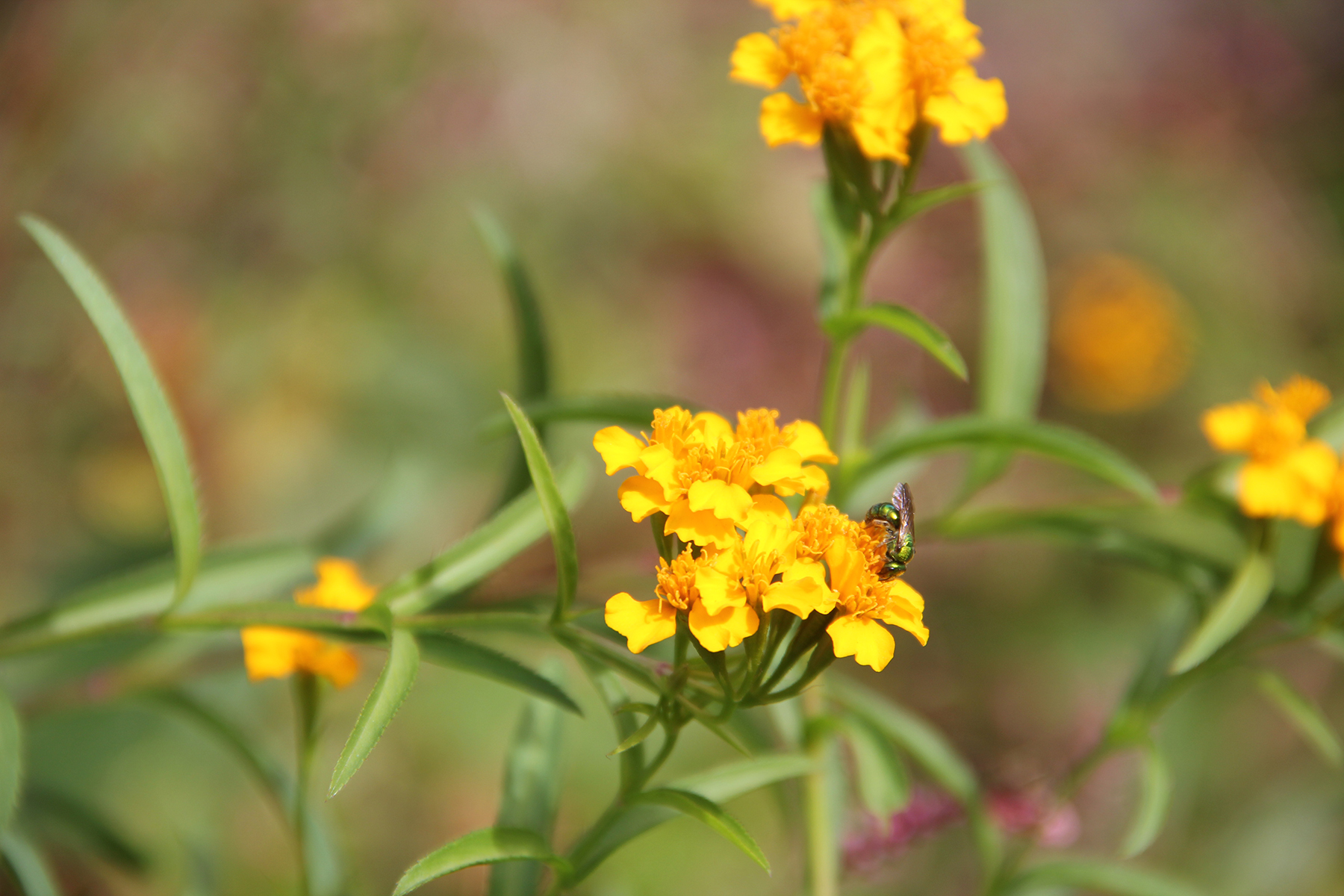
The Blue-winged Wasp is aptly named, with dark metallic blue wings that glint in the sunlight. It is a natural predator of the Japanese beetle, and its larva feed on the beetle grubs. What’s not to love about that!

Last we’ve got the Cow Killer, AKA the Red Velvet Ant.  These are not ants at all, but members of the wasp family.  The females are wingless and pack a powerful punch with their sting, reputedly enough to kill a cow!

Want to make your yard pollinator-friendly?  There are lots of ways!

  • First, cut the chemicals.  Everything that lives in your yard,  from insects to birds, will thank you for it.

  • Next, plant pollinator plants, like zinnias, echinacea, bee balm, coreopsis and goldenrod.  Wasps, hornets, and bees benefit, and you get to enjoy a color yard.

  • Finally, be a little messy.  Don’t be so fast to deadhead and clean up plant litter around your yard.  These areas can provide over-wintering places.

These buzzing pollinators provide valuable services to us humans.  Embrace them in your yard!

Photo by Debbie LeBlanc Foster

Photo by Debbie LeBlanc Foster

Morning Minute: October 25, 2018

News About Town: Have you voted yet? Early Voting for the 2018 Elections continues at the Matthews Library this week. Voters are coming out this year with turnout approximately two times 2014 totals after 5 days of voting. Polls will be open daily until November 3. Check the Board of Elections website for hours.

IMG_9976.PNG

News Around Town: The Matthews Heritage Museum, 232 North Trade Street, recently opened a new holiday-themed exhibit. “Christmas Past” displays holiday ornaments, books and memorabilia from the early to mid-twentieth century. Tour the museum and warmly embrace the nostalgia of Christmas past. The exhibit closes January 19, 2019. Admission is $4 per person, $2 for ages 11-17, children 10 and under are free.

One Fun Thing:  The Loyalist, 435 North Trade Street #102, is celebrating their One Year Anniversary this Saturday from noon until 9 PM. To celebrate they’re offering discounts on cheese and charcuterie boards, $1 off drafts and wine by the glass, and raffling off a year of free cheese (tickets are $5). Raffle proceeds will be donated to the The Joe Martin ALS Foundation.

HAWK: A Partnership Built on Cross-Pollination

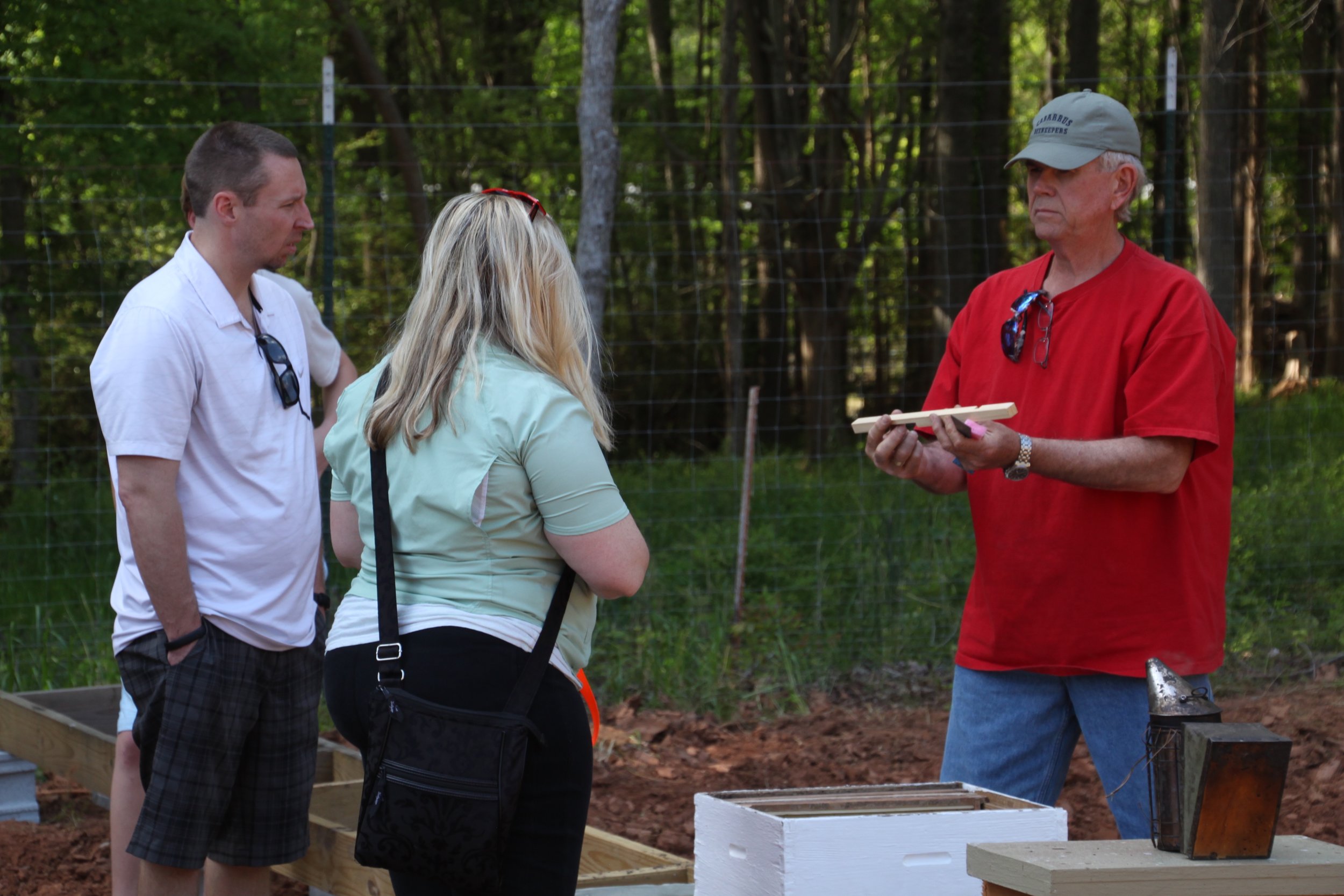
For Habitat and Wildlife Keepers, the Matthews chapter of the NC Wildlife Federation, education and awareness go hand-in-hand – something the group strives for in increasing their membership, working closely with the town and finding community and commonality in all their endeavors.

Photo by Cyma Shapiro

Photo by Cyma Shapiro

Five years ago HAWK worked with the Town of Matthews to register and certify the town itself as a Wildlife Habitat through the North Carolina Wildlife Federation – the 64th such community to do so in the nation and the first chapter in North Carolina. To date, there are 13 such communities in NC and approximately 200 across the country. To add, “tens of thousands of supporters and activists are currently members in the statewide organization,” said Tim Gestwicki, CEO of the NCWF.

According to Daniel Jakobovits, avid “tree hugger, wildlife/naturalist,” former vice-present, now new -president of HAWK, education and awareness go hand-in-hand – something the group strives for in increasing their membership, working closely with the town (government) and finding community and commonality in all their endeavors.

“Part of our mission is to continue to educate the public,” said Jakobovits. “You can’t care about something unless you understand it……and there is the intersection of what we do. We (intend to) continue down our mission to educate folks,” he said, adding that people don’t necessarily need to kill the spider or bee or snake they see. “All of these (are) wonderful things - to have folks understand this and have that sense of wonder and engagement for things that are all around us, but (that) we don’t know about.”

There are 4 elements required for a backyard habitat:

  • food

  • water

  • shelter

  • a place to raise young.

On the first Tuesday of each month (during the body of the school year), HAWK holds meetings on topics ranging from deer and coexistence in the community to native plants and wildlife. From moss workshops, owl and frog walks to worm composting classes and foraging. They’re often attended by up to 100 interested audience-members. In addition, the group hosts annual events such as Earth Day and Kids in Nature Day (KIND) with the Town of Matthews, and hosts a table at the Farmer’s Market twice a year.

Annually, HAWK follows through on their mission to help increase awareness and membership and help homeowners and businesses certify their properties.  Said Gestwicki, “The community wildlife certification would never have occurred without the full involvement of HAWK – they came up with the game plan, the objects, the goals and followed through to inform the constituents of Matthews, and implement a plan. This could not have happened without HAWKS’ past, present and future dedication to all local wildlife and its habitat.”

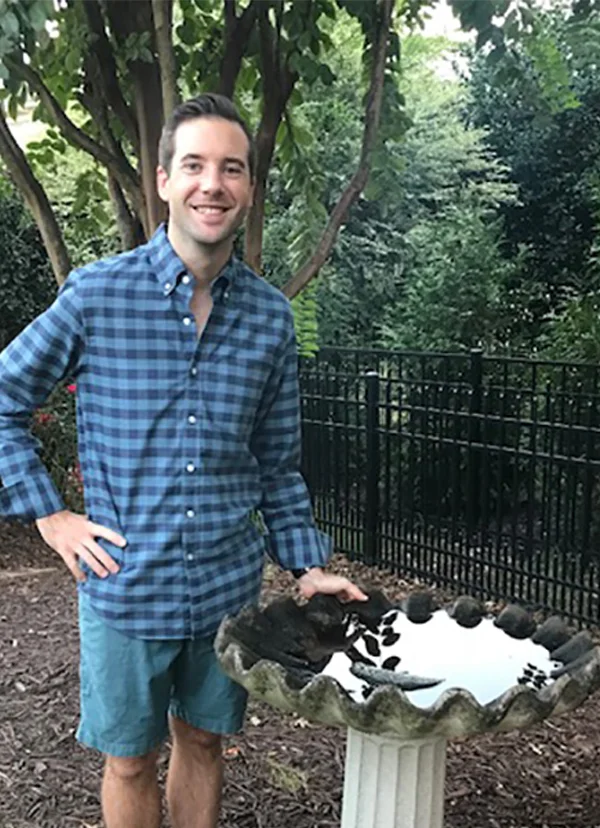
Jordon Vardon, showing one aspect of his backyard habitat. Photo by Cyma Shapiro

Jordon Vardon, showing one aspect of his backyard habitat. Photo by Cyma Shapiro

At the heart of this work is the commitment made by individuals. “The value of becoming a member of our group as well as the value of certifying their property doesn’t take an act of great magnitude,” said Jakobovits. “Certifying your yard – the idea is that you are making some level of commitment for a habitat – food, water and shelter, and a place to raise their young. It doesn’t need to be for larger creatures – bear or deer. But, if we can connect all these habitats, we now have a corridor for wildlife.

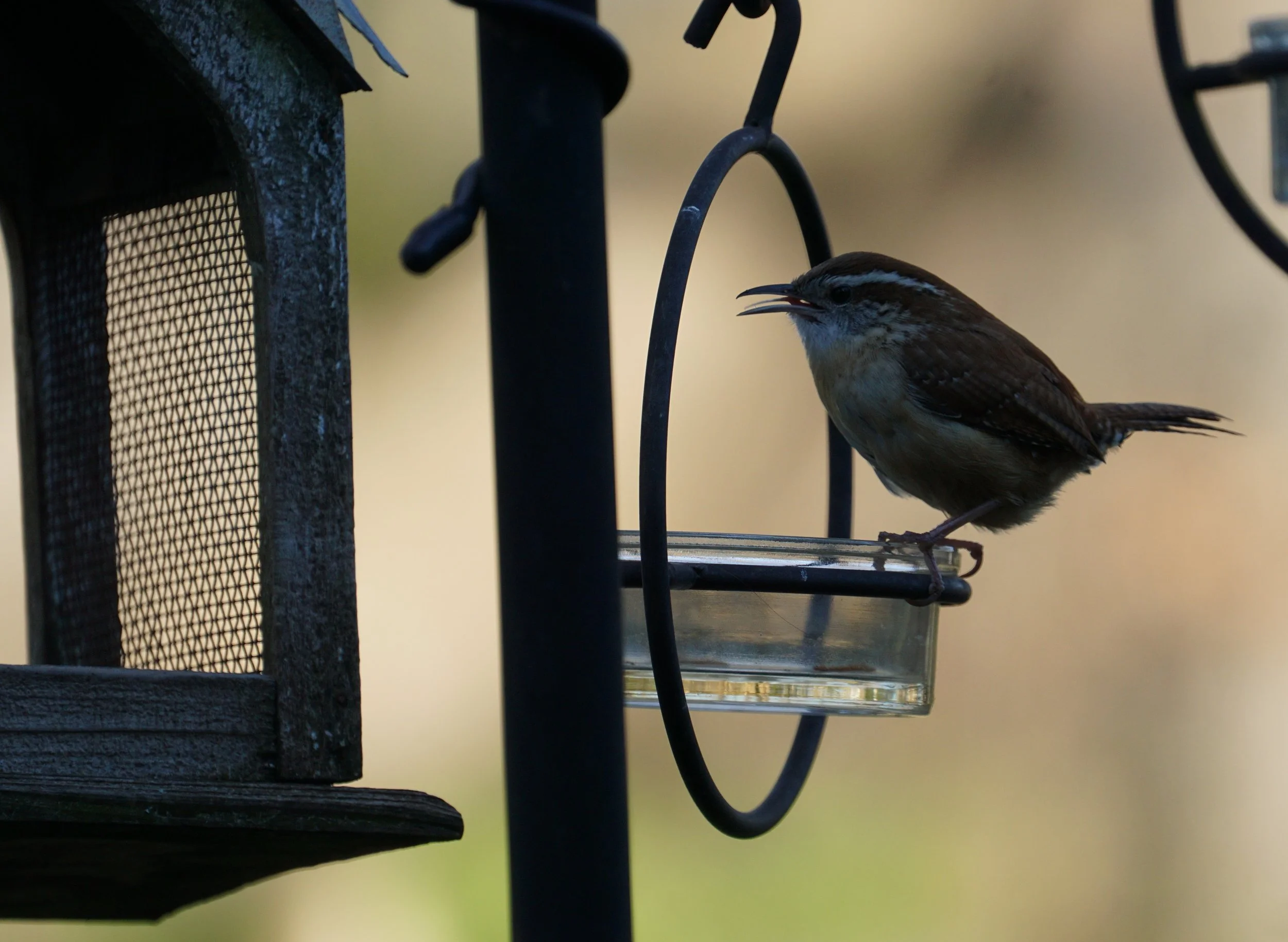
People who have a birdhouse or bird feeder are already two steps down that path. All they need is a birdbath or source of water and they can get their property certified.”  In effect, he said, “you are doing this with purpose – how can I do this better?”

It is a message not lost on Jordan Vardon, who recently certified his property on Willow Brook Road – 1/3 acres in the middle of a subdivision.  According to Vardon, the father of two young children, this is not only a way to learn about birds, which he is clearly passionate about, but also teach his two young children how to identify and enjoy them, as well.

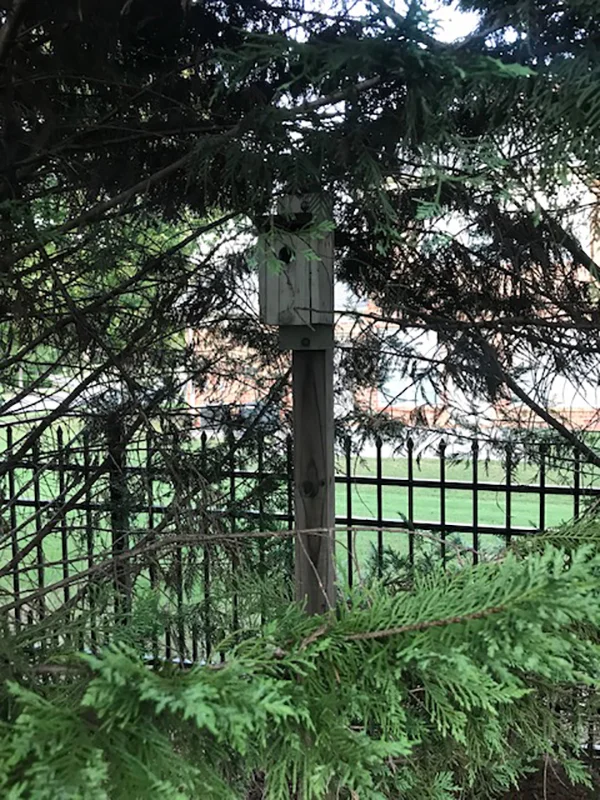
“This is a way to bring more birds into the back yard,” he said, “while creating an oasis for (some) of the birds in decline. (We’re) giving birds the space to come back.” To date, he’s seen 30 different species in his yard - a few of which have chosen to nest in two carefully hidden bird houses  - “hidden by design to give them cover – the birds want to feel safe,” Vardon said. He likens his pursuit of bird-watching to a treasure hunt.

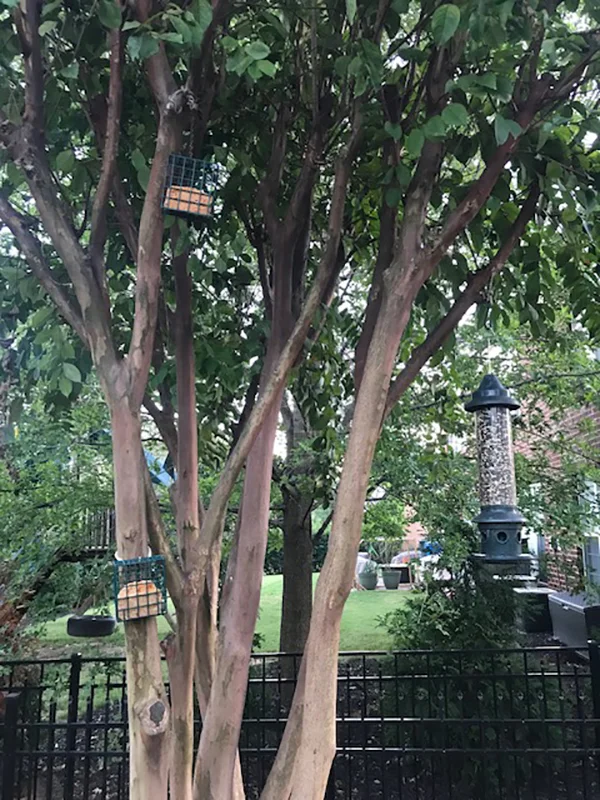
In his case, despite a small yard surrounded by nearby houses, his surroundings have created a joyful space for his family to enjoy - his poured concrete antique birdbath was purchased after a six-month hunt; his bird feeders are hoisted in the trees nearest the bedroom to allow the family to watch the various species more closely. This is a shared experience - “the kids love it,” he said.

In the end, it is that same experience which brings many Matthews individuals together. “We’re for all wildlife – small and big and everything that is part of that web,” said Jakobovits. “Part of the crossover involves people interested and passionate about bees. We’re a….cross pollination of people (whose interest) extends from bees to wildlife to humans,” he said. “We work very well together; we don’t compete with (other organizations) – we want people to enjoy and connect with nature at whatever level they want to.”

We’re a….cross pollination of people (whose interest) extends from bees to wildlife to humans.
— Daniel Jakobovits
Photo by Cyma Shapiro

Photo by Cyma Shapiro

For more information or to join HAWK, visit their website Habitat and Wildlife Keepers.

Morning Minute: October 24, 2018

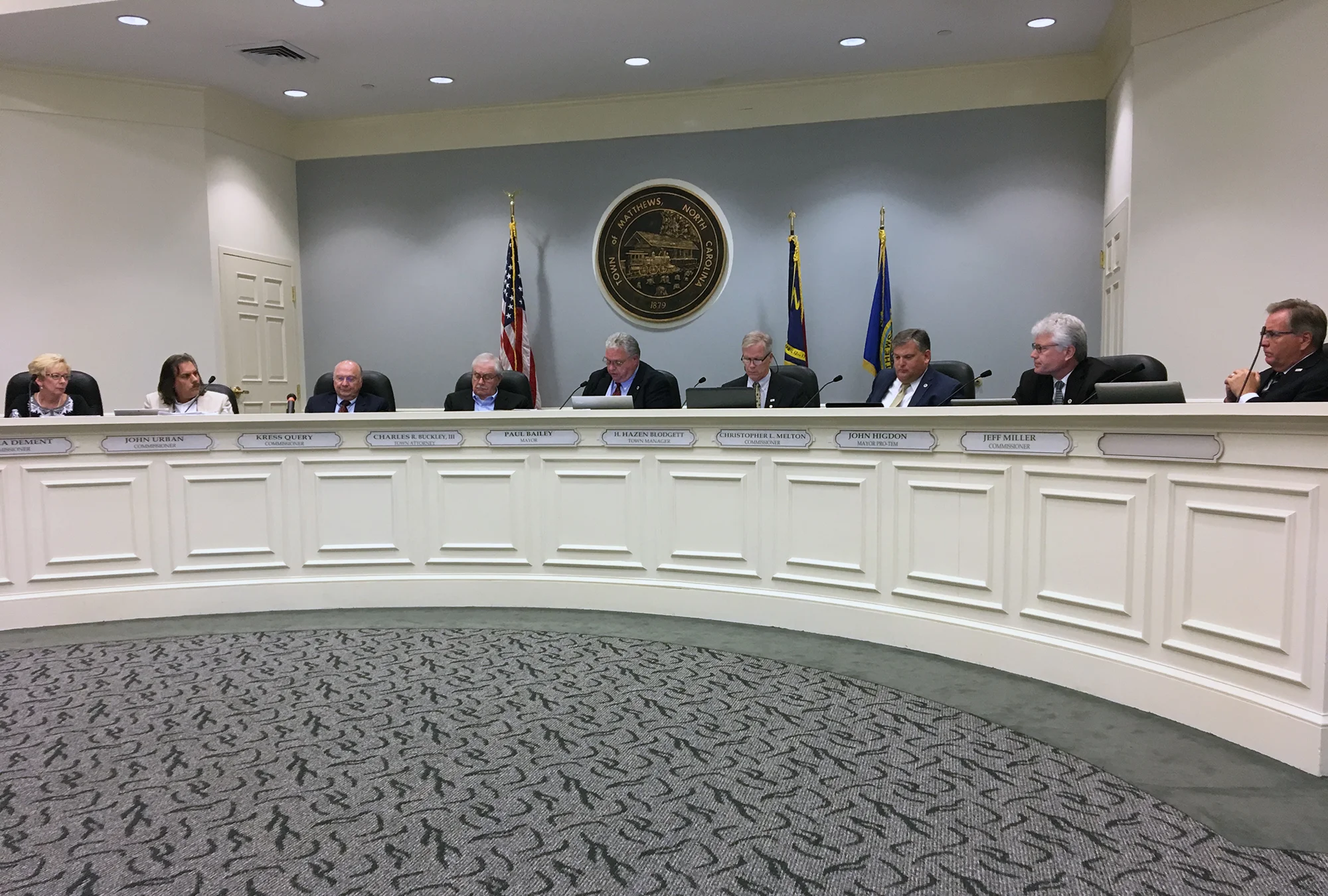
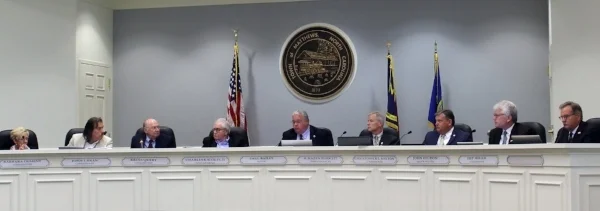
News About Town:  During last night’s council meeting the Board looked at and discussed the Parks, Recreation & Cultural Resource Advisory Committee’s recommended annual tourism grants. Recipients are Charlotte City Ballet, Matthews Athletic & Recreation Association, the Matthews Chamber, Matthews Kiwanis Club,  NC Youth Rugby, and Matthews Playhouse.  With half of the Chamber’s request granted, the committee spokesman explained the requested amount for the organization was not granted because the Chamber received funds from the town as a Departmental Operation line item in the fiscal year ‘19 budget. The Board requested reconsideration by the committee on their decision.

council.jpg

News Around Town: Love it or leave it, Nextdoor is tuned into the community at large. They’ve just opened the 2018 Neighborhood Favorites Survey and want to know what members think of area businesses. Categories include, but are not limited to restaurants, nail salons, florists, and auto mechanics, most of which have several Matthews options. Too bad there’s no option for “Matthews-centric Online Newspaper”.

IMG_9965.JPG

One Fun Thing: Get those obliques working by belly dancing with Nayna tonight and every Wednesday at Rhythm Dance, 120 W Matthews Street in downtown Matthews. Nayna teaches the essentials (including footwork, figure 8s, shimmies, arm and hand movement) in this basics course that’s suitable for all levels.  7:30-8:30 PM, $20 per class or $60 for a four week session.

Pollinators: A Photoessay

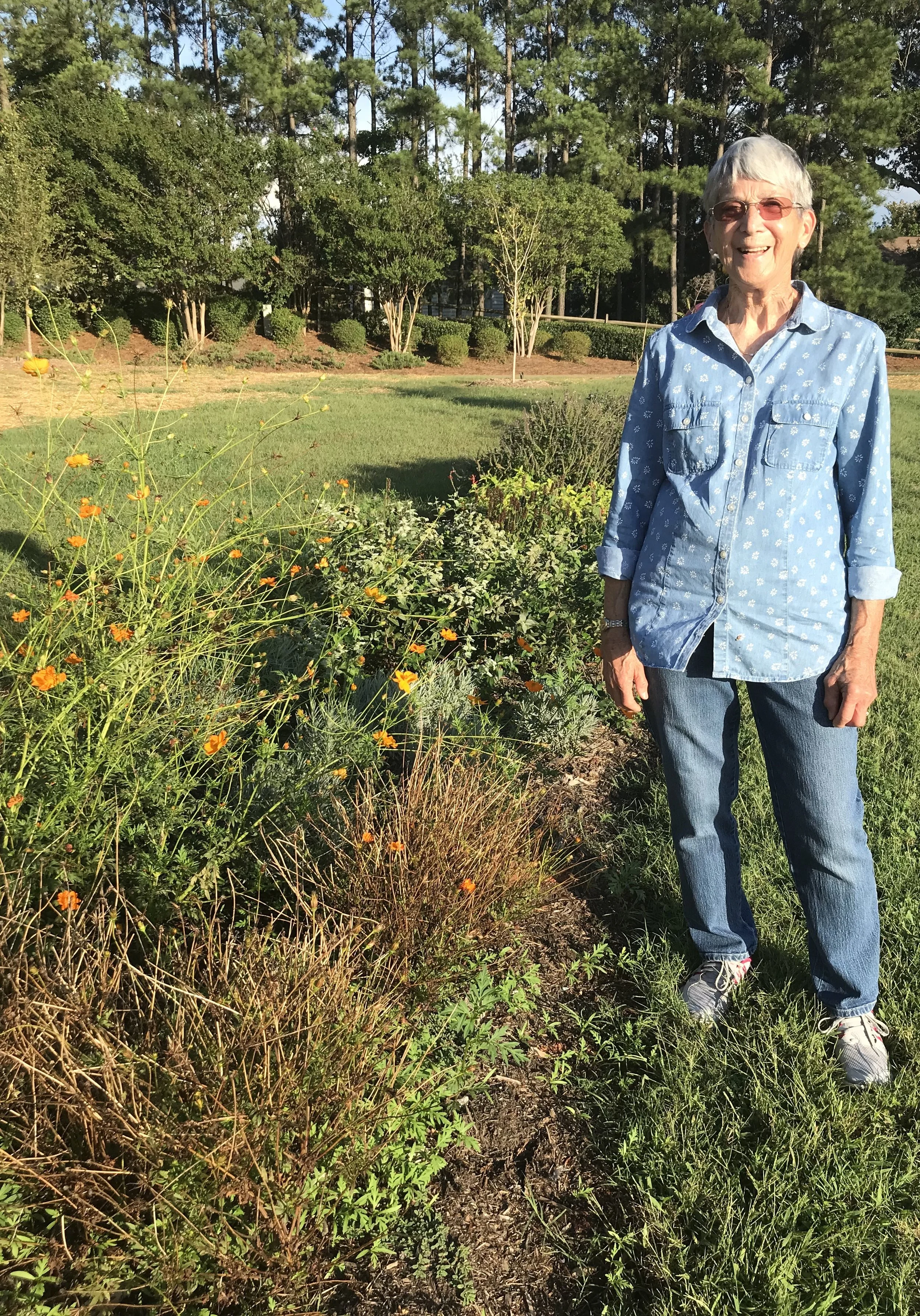
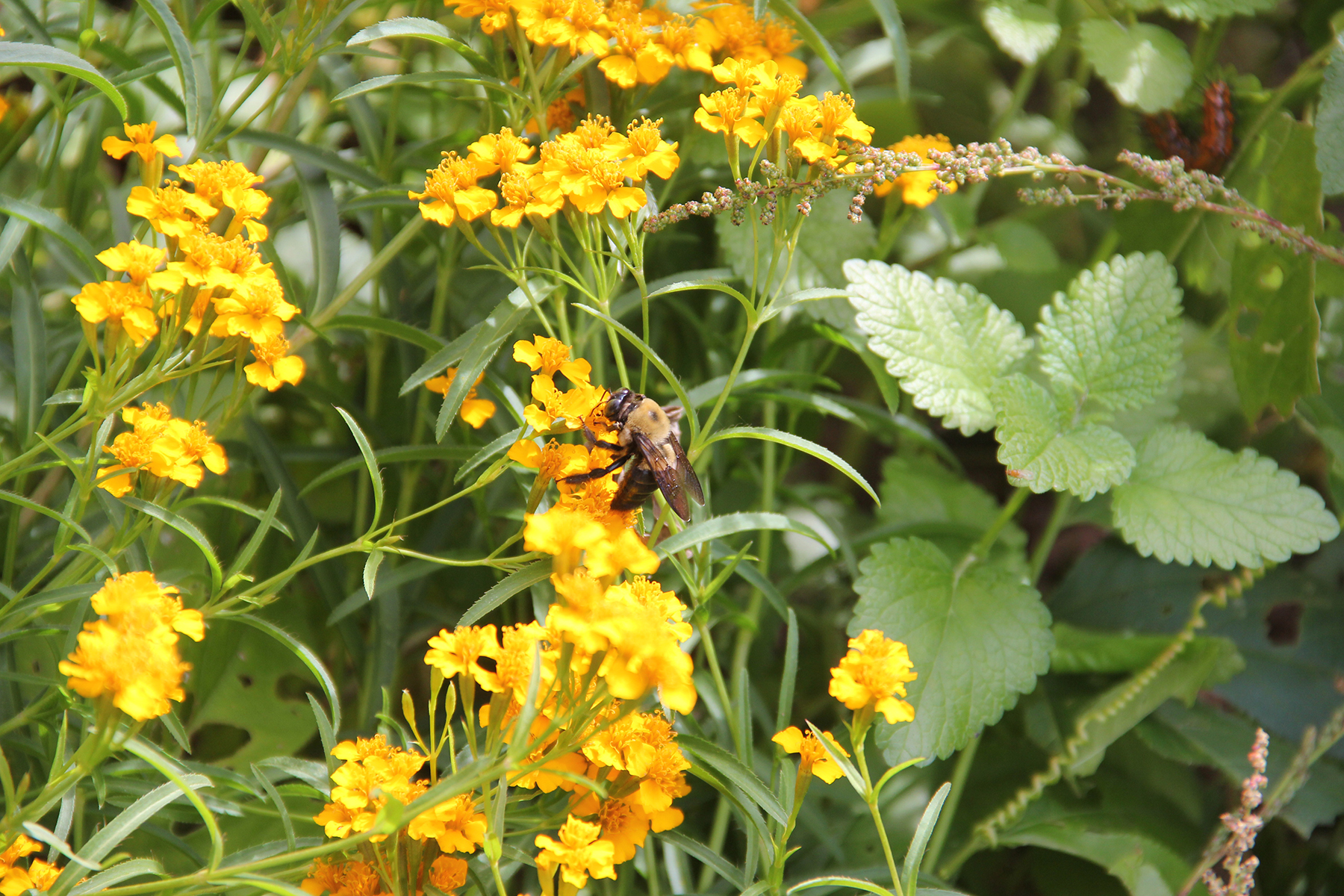
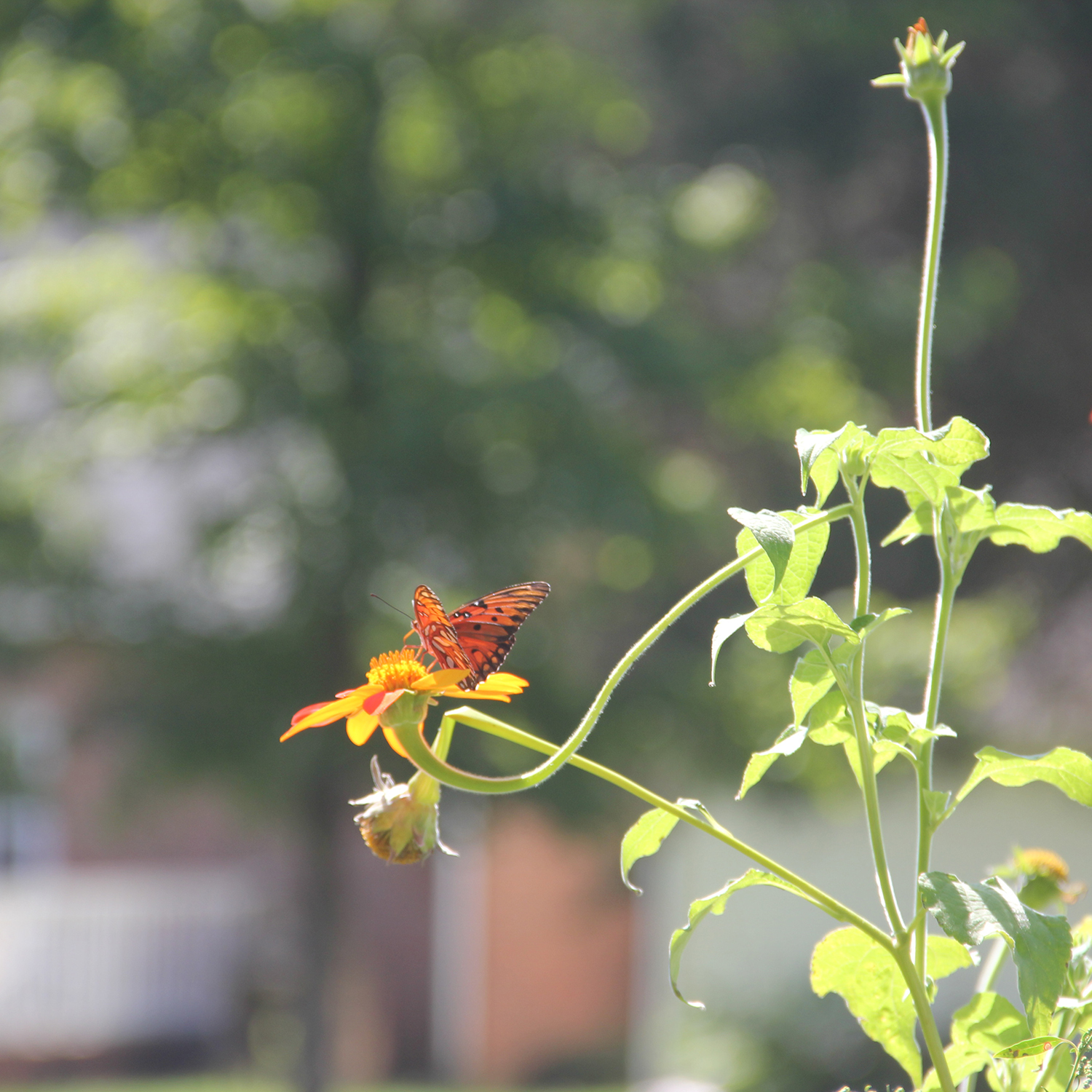
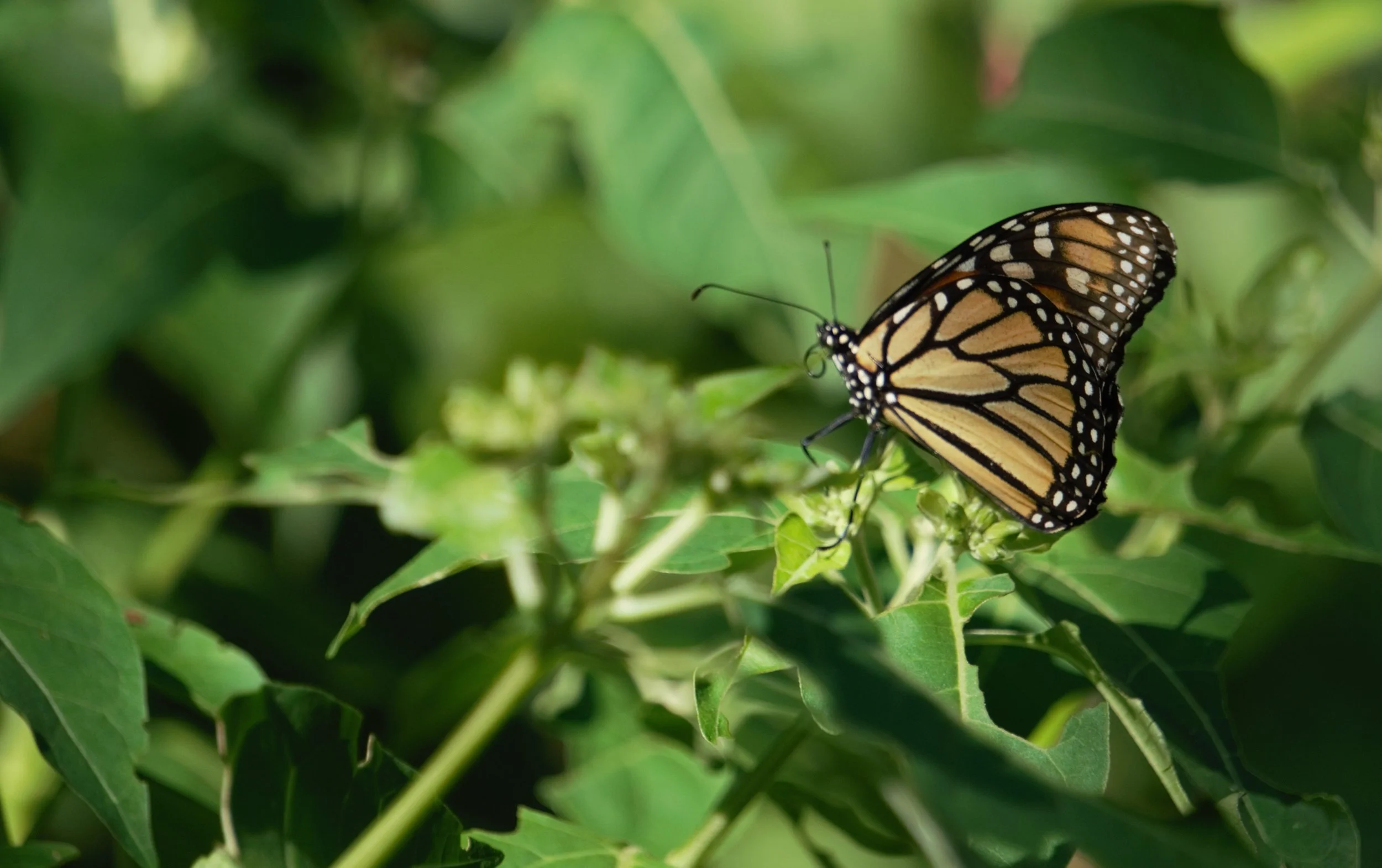
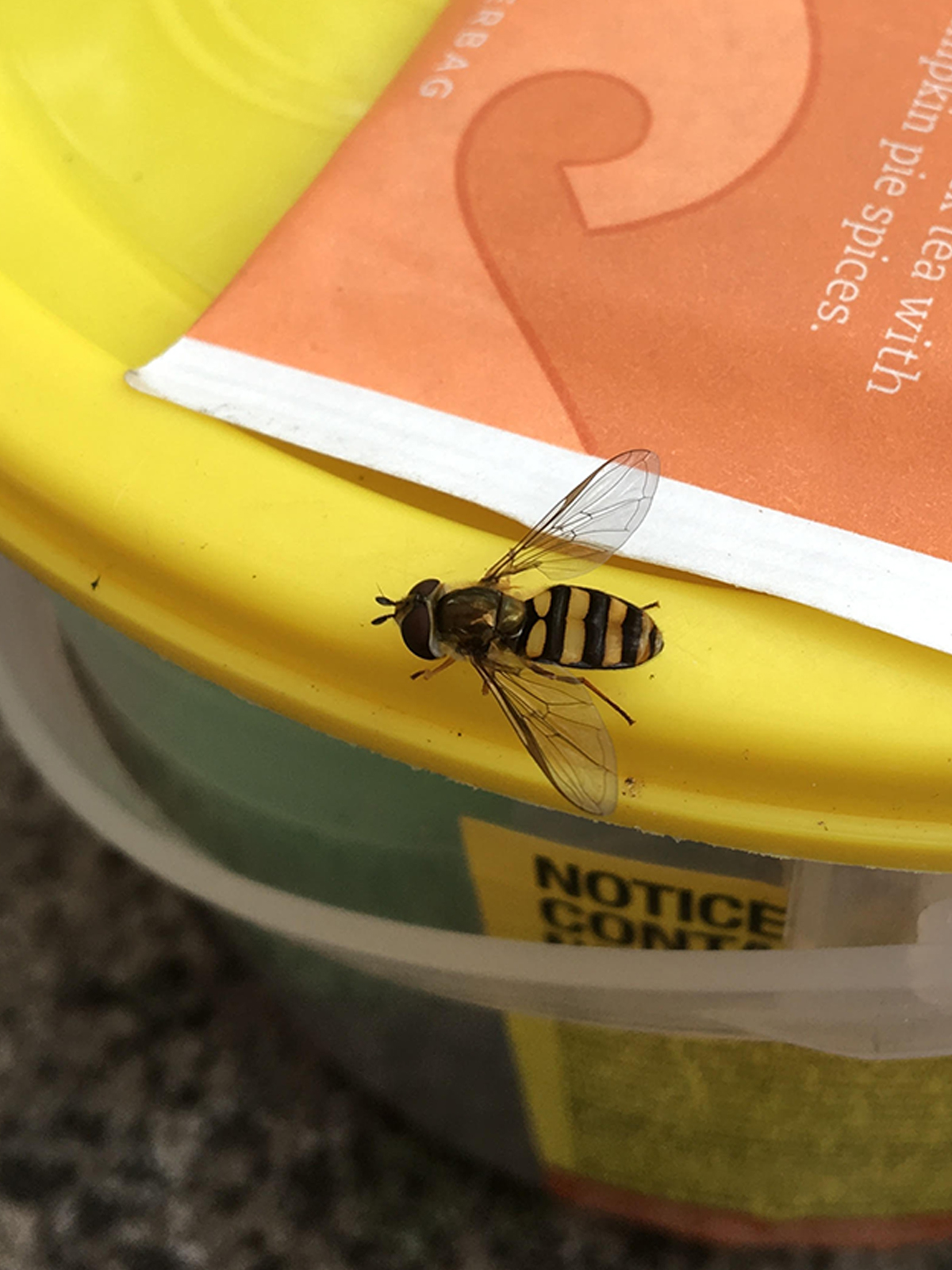
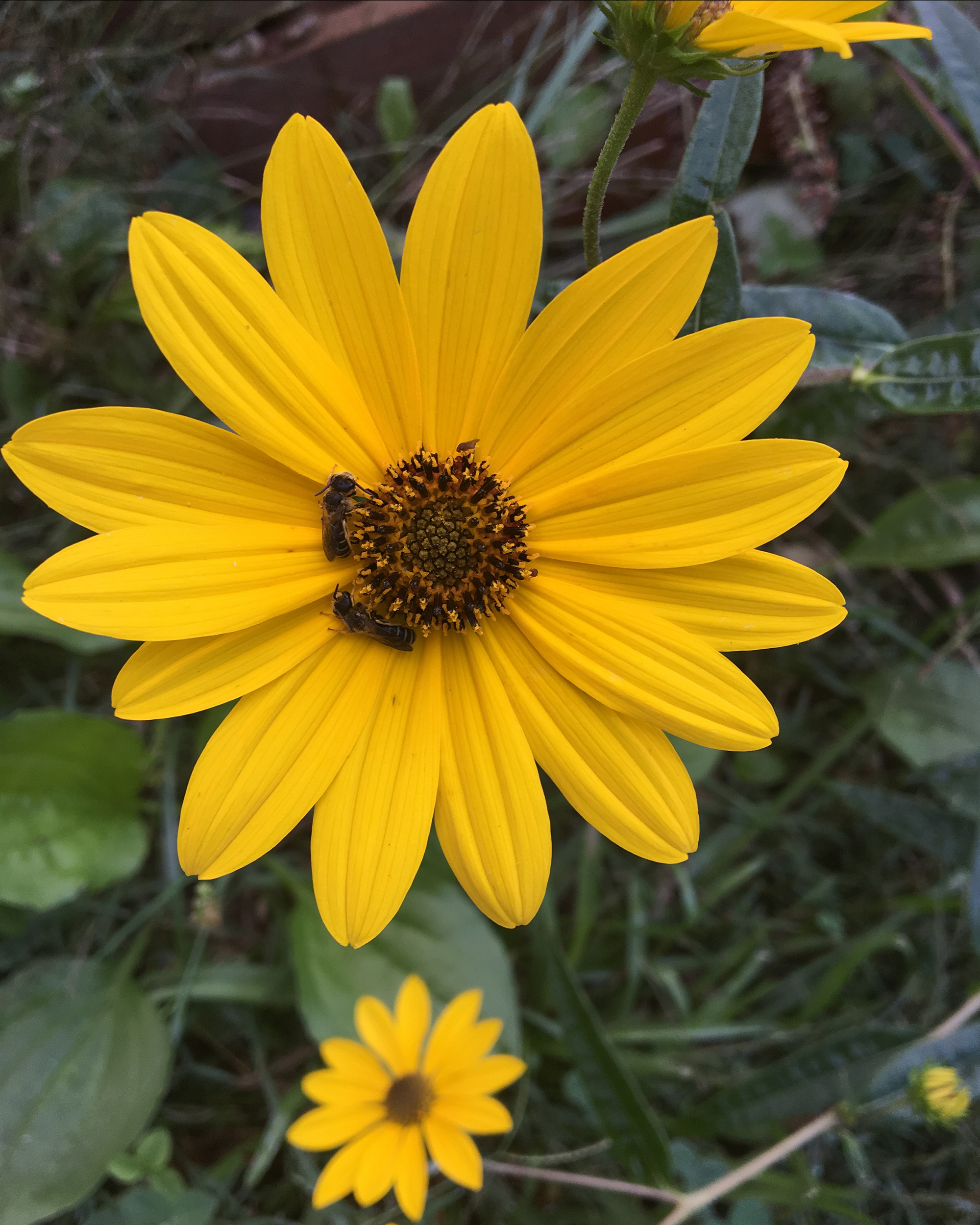
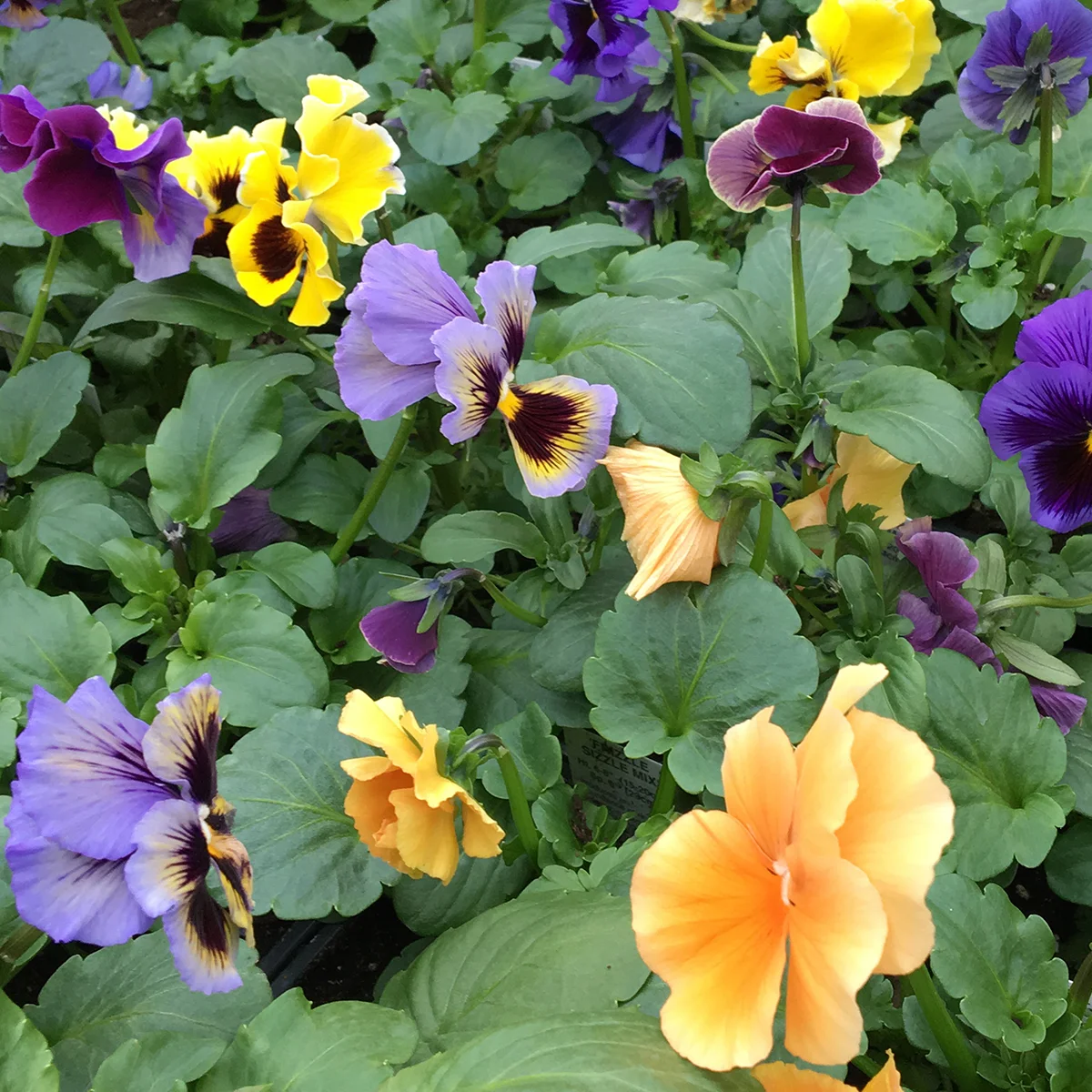
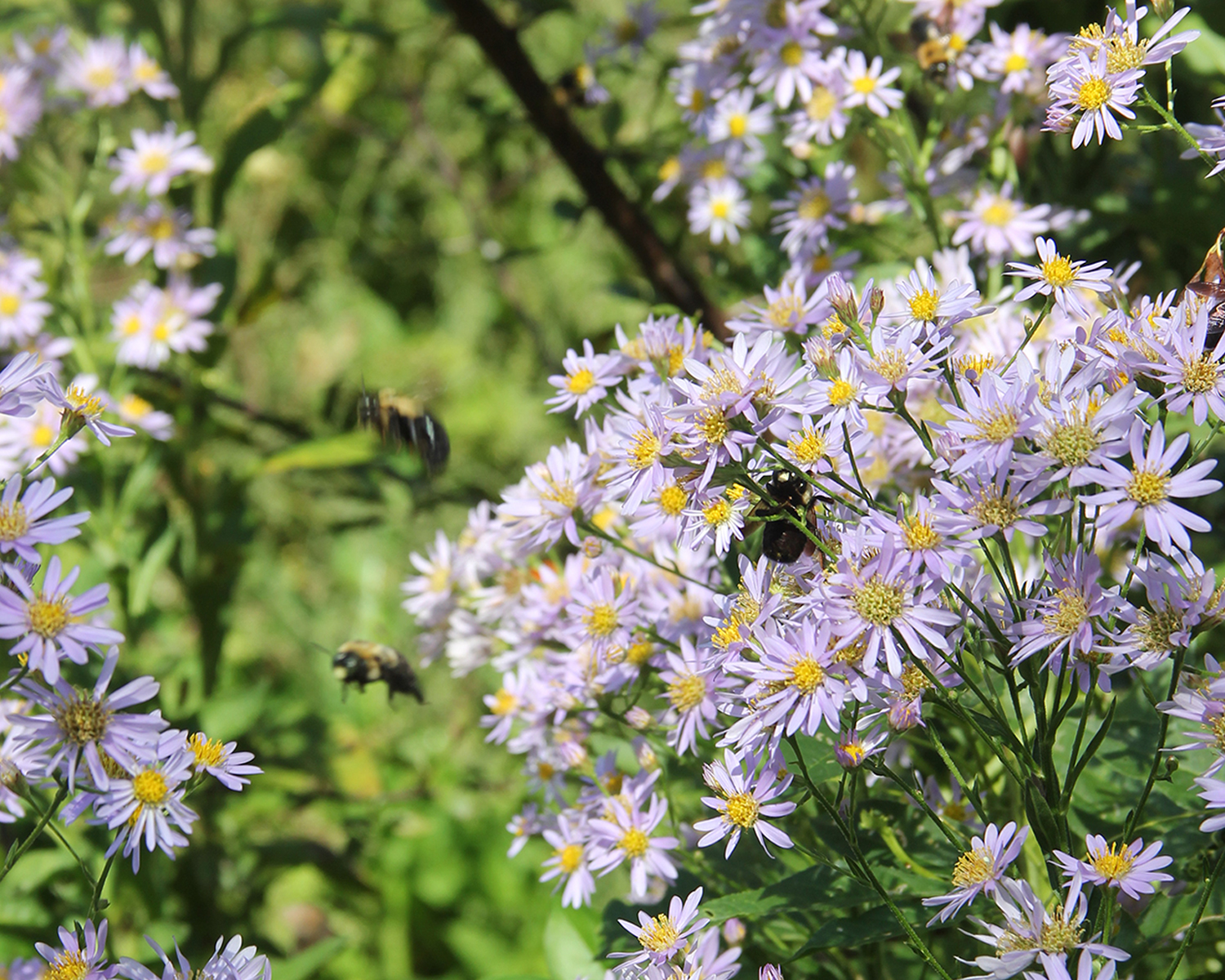
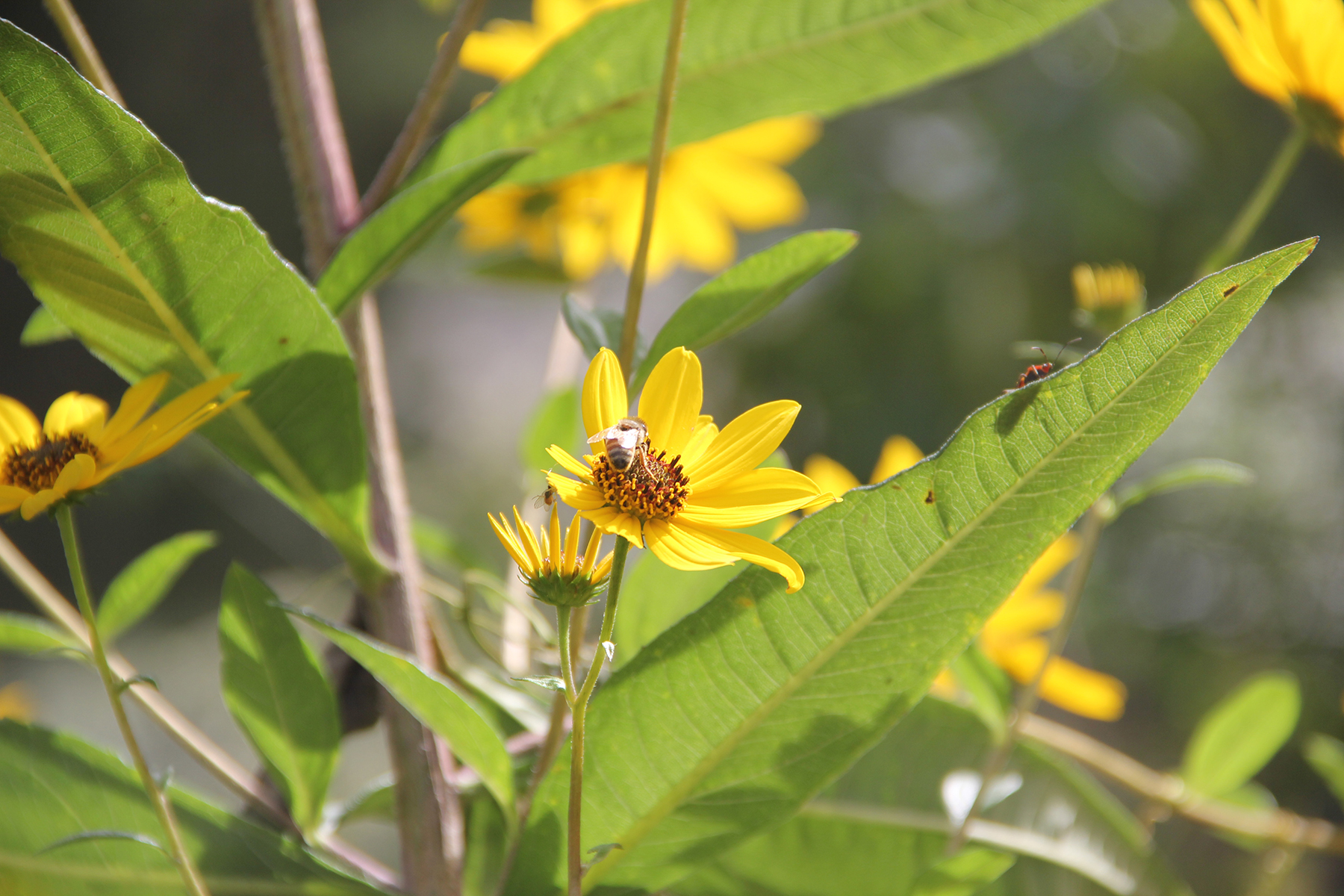
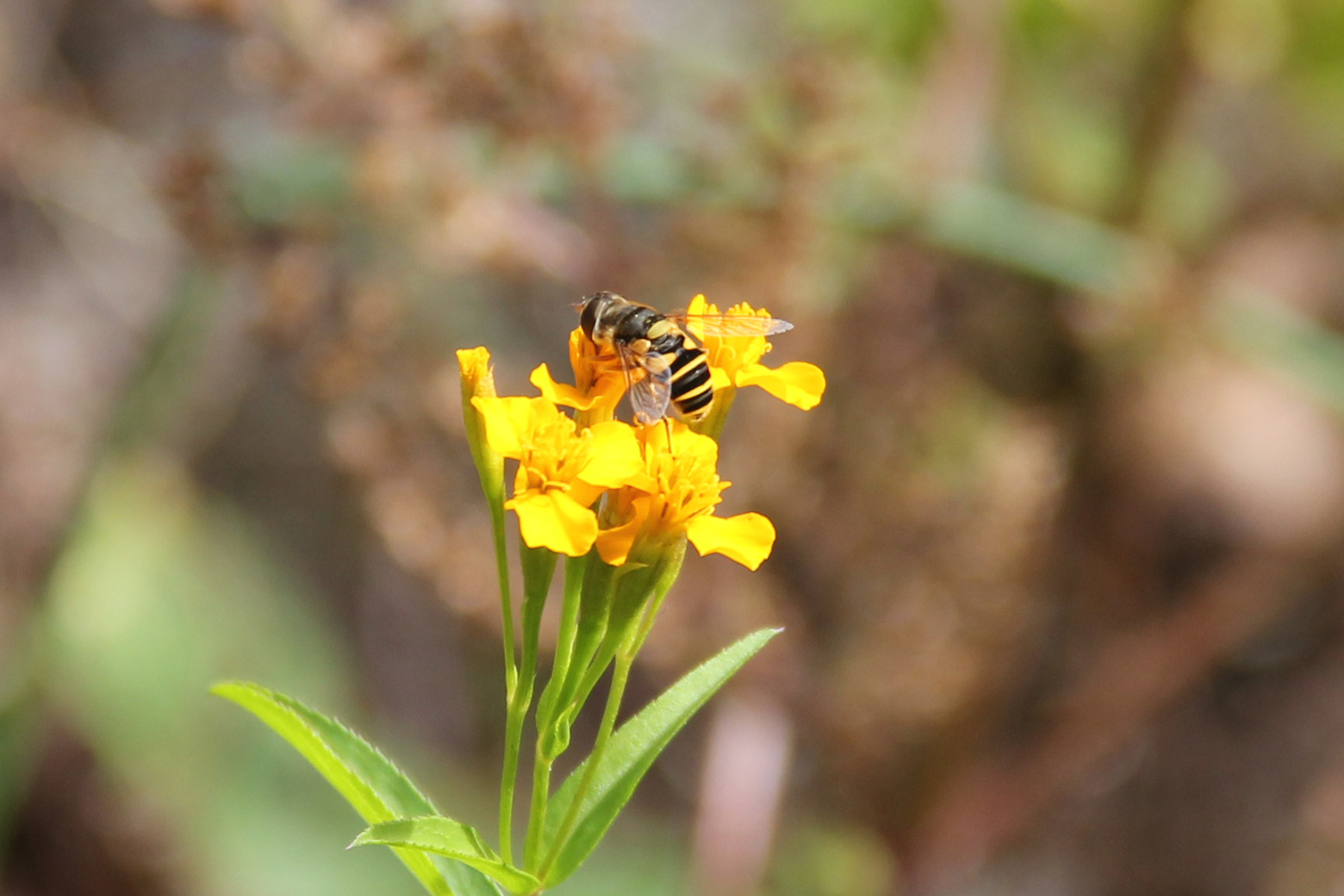
After all the hurricane rain our yard suddenly bloomed in large swaths of fiery oranges (tithonia, zinnias) and sunshiny yellows (perennial sunflowers, Mexican tarragon). A handful of pale purple native asters tower among the tangled vines of American passionflower, making a natural home for an array of native bees. Hoverflies, mason bees, carpenters, bumbles, and honeybees are all taking advantage of the pollen party, filling up before the weather gets too cold for most flowers.

John Caudle: Rancher of the Airwaves

Photo by Pressly Williams

For many townspeople, beekeeper John Caudle’s story is already well known. A landscaper. Third-generation farmer, running a tree nursery and tree farm. Nearly ten years ago, a diagnosis of Stage 4C tonsil cancer brought him to death’s doorstep. A last night of gasping breath, with no energy to get out of his chair brought on a vision of Jesus and then a blackout.

The next morning he was alive and breathing.

To hear him say it, he was, in effect, instantly reborn; his new life begun. He also proudly states that he has been in remission ever since.

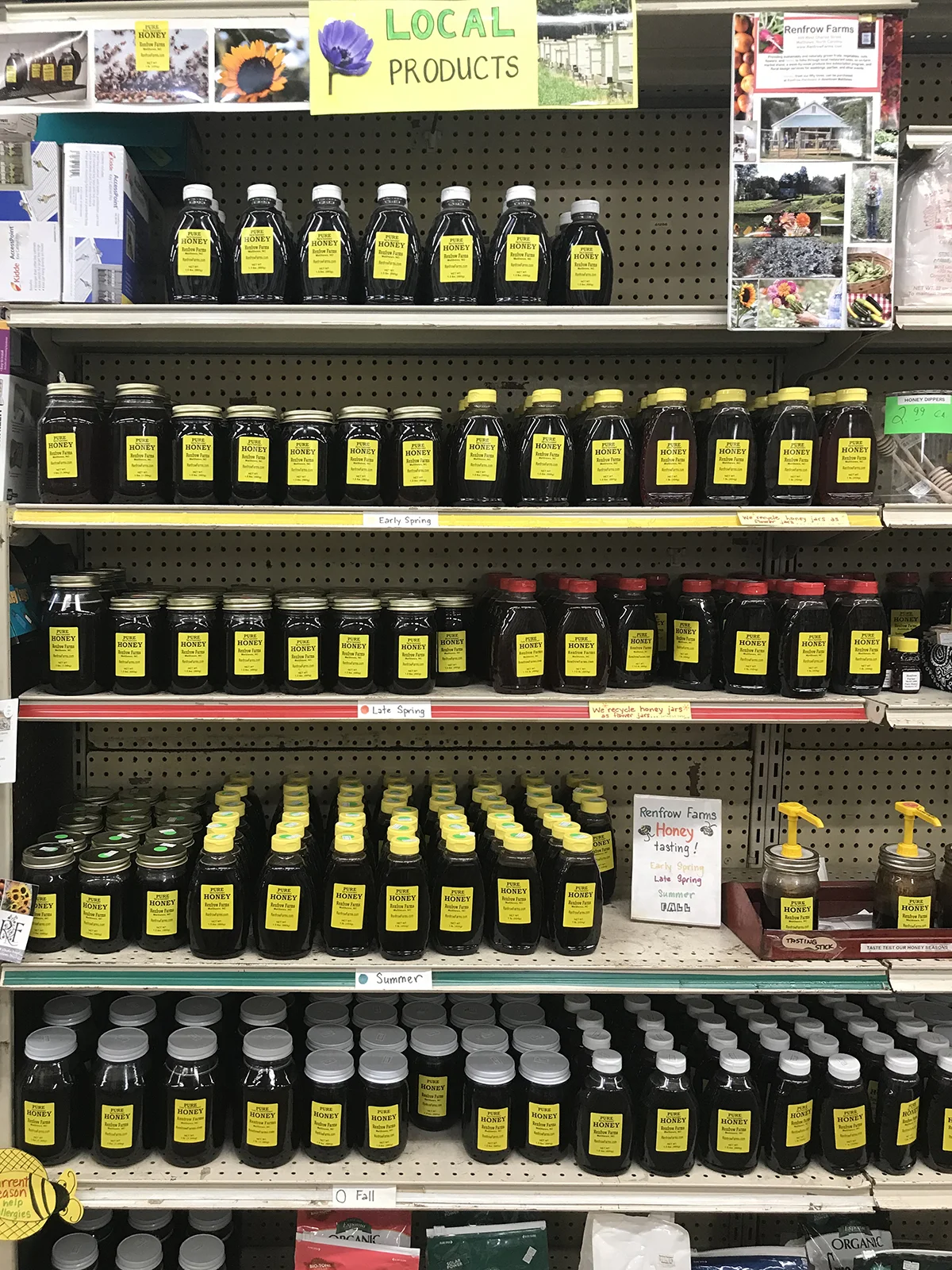
Townspeople may also know that he originally sought out another career when he was too weak to continue his old one and fell into beekeeping; that his first harvest of honey produced dead bees and that he is now the proud owner of “Herb’s Honey,” a pure raw honey product which isn’t heated or mixed with corn syrup. His product is sold at farmer’s markets, Renfrow’s Hardware store in Matthews, honey markets and Earth Fare stores. (He also sells to a Raleigh bottler who mixes his honey with corn syrup to make “honey sauce.”)

Photo by Cyma Shapiro

Photo by Cyma Shapiro

There are days when I’m there by myself…..I can be in the middle of 20 million bees and it’s like…all of sudden it’s as if they’re talking with me. I don’t understand bees, but there is a hum and a series of pitches of hums that they give to me.
— John Caudle

Fun Bee Facts

  • Honey bees fly at a speed of around 15 m.p.h. and beat their wings 200 times per second!
  • Each bee has 170 odorant receptors, which means they have one serious sense of smell! They use this to communicate within the hive and to recognize different types of flowers when looking for food.

      (Source: National Geographic Kids online)

Today, at age 62, he feels deeply and fervently that his honey is a creation that helped save his life and can help heal others. He speaks lovingly of his “girls” – the tens of thousands of bees he owns in his over 1,000 honey boxes located in seven counties and those in his direct family – a wife, two daughters, one granddaughter and another on the way, all of whom now help or will hopefully help him in the future with the business.

“I like the bees,” Caudle said. “There are days when I’m there by myself…..I can be in the middle of 20 million bees and it’s like…all of sudden it’s as if they’re talking with me. I don’t understand bees, but there is a hum and a series of pitches of hums that they give to me.”  

“I feel as if God has made me as one with his children – the bees,” he said. “God has created them. It’s nothing I did. This is 100% a gift of God.”

To go along with these sentiments are an ongoing, nonstop rumination about some aspect of his business that he must tend to, learn about, work with or grow. “(You) wake up in the middle of the night and your mind is running a million miles/hour. That’s God talking with you,” he said. “In the morning, I’ve got this new plan or direction.”

Photo by Pressly Williams

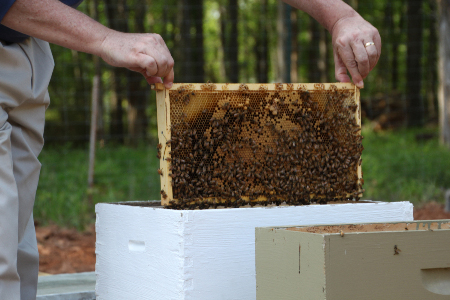
His bees are called hybrid Russians. He sells 100,000 pounds of honey each year. In peak production time (April – August), his boxes (colony) yield 50-70,000 bees, each.   One hundred and ten of those boxes are located in Matthews.

Talking from his honey lot located in Renfrow Farms on West Charles Street in Matthews, he expresses pure joy at being able to do something he feels fundamentally passionate about and which he sees as a direct result of his relationship to God. “This is all a gift and a direction by God; this is not of my doing,” said Caudle, who by his own admission was missing a “personal relationship with God,” before his life-threatening illness changed his life.

While he said he often prays in his truck, upon entrance to his honey box areas, he also says a brief “thank you” to his Creator for giving him his bees. “God, thank you – look at them, they are all alive. Oh, thank you God,” he said.

A walk around his honey boxes becomes a thing of joy, with Caudle extolling the beauty of his bees (this time of year - yellow, black, orange, or gray in color), the beauty of his boxes (originally marked with simple logos which his bee-teachers said were a necessity to steer the bees to the correct boxes), the importance of his Queens (carefully picked by him and sometimes killed and replaced by him out of necessity for survival of that colony), excitedly sampling the variety of honey smells (lifting the box lids to sniff the differing aromas), often sampling his own wares (up to two to three pounds/day).

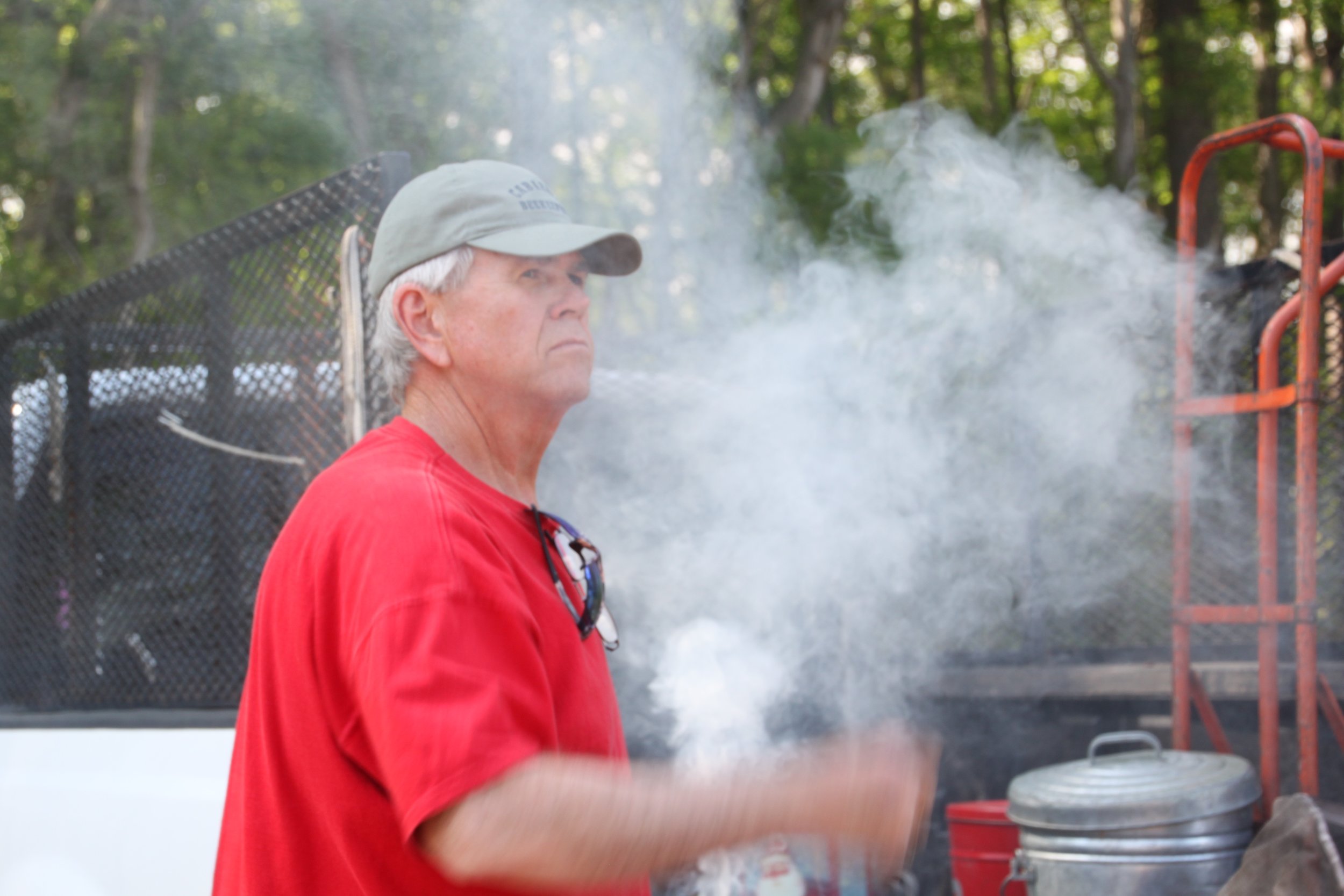
Caudle is a man content with using a pine needle smoker to spray over his body, rather than use full body or other cover-up gear. His mission is to be with and get as close as possible to his bees/colonies/boxes.

“We are ranchers of the airwaves,” said Caudle. “They fly up and away – up to two miles, collecting pollen for the preservation of their hives, bringing nectar back for the hives.”

In Matthews, his honey lot and participation in selling his wares at Renfrow’s was a serendipity of circumstances. Seven years ago, Renfrow’s owner David Blackley was seeking a way to better pollinate some of his crops which weren’t doing well (butternut squash and zucchini); Caudle’s brother wanted to encourage him to pursue beekeeping, which was in its infancy. They struck a deal: 10 initial boxes on about 1/3 acres located on the now nine-acre farm. That year, the crops were a significantly better yield, and so the partnership, John’s business and Renfrow’s crops flourished.

“It is very good honey,” said Blackley, “...some of the best in Mecklenburg Country. It’s a great addition to the farm sales. We’re pleased that the hives have done well.  John has done a great job of keeping them,” Blackley said. “We like the fact that it’s unpasteurized and has no commercial agriculture happening (around the location) for three miles.”

This is clearly a man in love – in love with all his “girls,” as he calls them; in love with life and in love with his life.  

So, what does the future hold? More time with his daughters, his grandchildren and a possible doubling of his hives.

“Everything is a timeline,” he said. “I love my creator. I love my family. I love my bees.”

We are ranchers of the airwaves. They fly up and away – up to two miles, collecting pollen for the preservation of their hives, bringing nectar back for the hives.
— John Caudle
Photo by Pressly Williams

Did you know? Over the past 15 years, colonies of bees have been disappearing; the reason remains unknown. Referred to as ‘colony collapse disorder,’ billions of honey bees across the world are leaving their hives, never to return. In some regions, up to 90% of bees have disappeared. (Source: National Geographic Kids online)


Morning Minute: October 23, 2018

News About Town:  We all know better than to drink and drive, but may not put it into practice. Last week the Matthews Police Department made five DUI arrests. Following a nationwide trend, DUI arrests are down in Matthews, possibly due to the increasing convenience of Uber and Lyft services and other transit options.

dui.jpg

News Around Town:  Fullwood Animal Hospital Spay Neuter Clinic is hosting their annual Feline Spay/Neuter Day tomorrow, Wednesday October 24, 2018. Prices are $65 to neuter (male) and $95 to spay (female). With limited spaces available book ahead 704-545-2235 to secure a spot for your cat. Rabies vaccination must be current and are an additional $12 if needed.

Image courtesy the Town of Matthews

Image courtesy the Town of Matthews

Some Fun Things: Join the Town of Matthews for a “Not-So-Spooky Halloween” at Stumptown Park, Saturday, October 27th, 5:00 PM. to 9:00 PM. Dress in costume if you feel so inclined, there will be trick or treating with area businesses set up throughout the park. Free family-friendly activities include face painting, carriage rides, and all the sweet treats you can imagine For some, the clown entertainment (Curley) will be enjoyable. A showing of the movie “Halloweentown” begins at dusk.

Join the Alliuminati

Onions and garlic are easy to grow,

overwinter in our mild climate,

and are powerhouses of nutrition and healing.

alliums.jpg

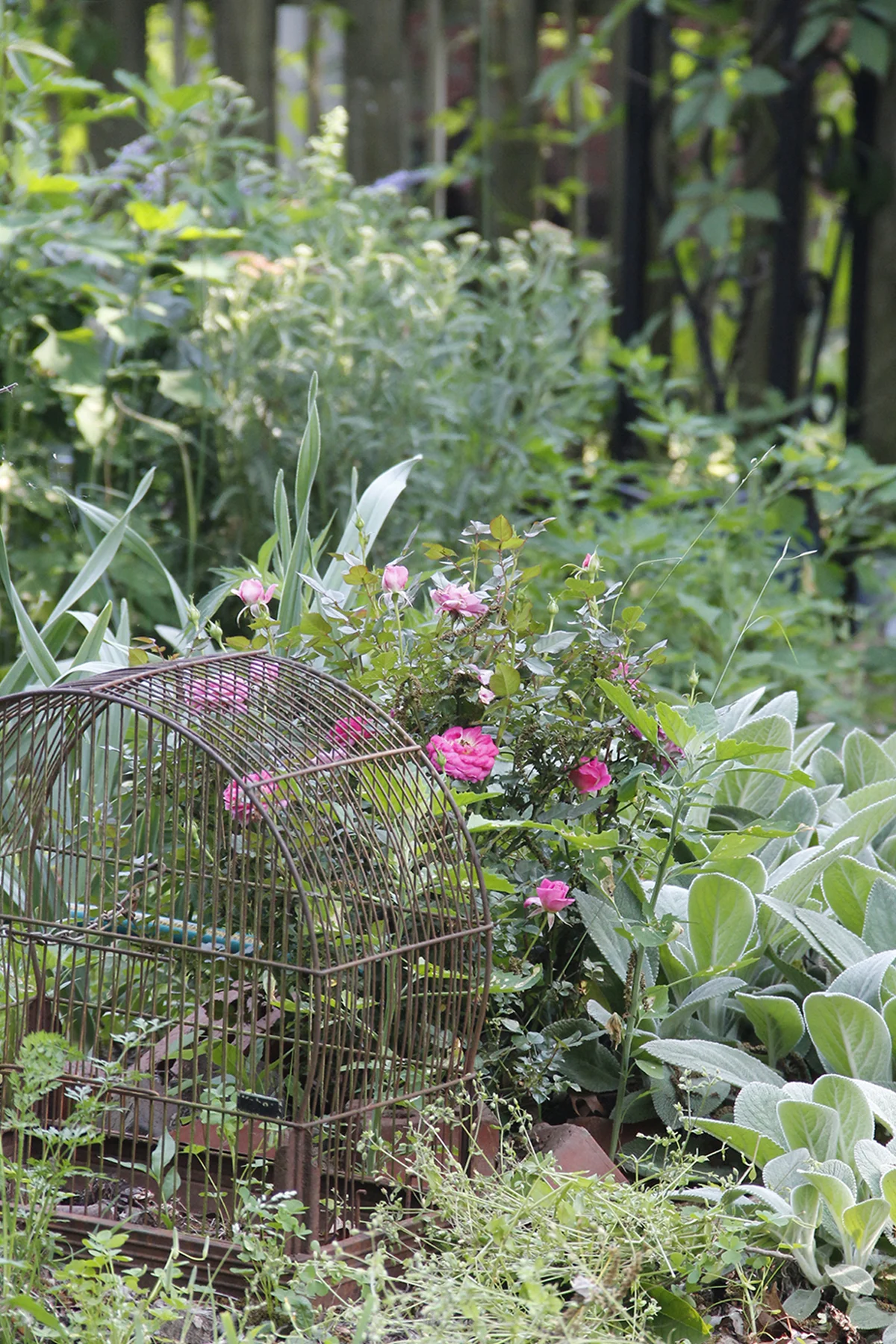
This time of year is a really good time to plant lots of perennial plants, everything from trees to shrubs to flowers and vegetable plants. Planting in this cooler season gives your plants weeks of root growing before the warming temperatures bring on the riot of growth that is Spring. So cool-season planting is the start of your 2019 garden!

Let’s start that planting with onions and garlic! These plants are easy to grow, overwinter in our mild climate, and are powerhouses of nutrition and healing. There are several types and varieties to choose from, as well.

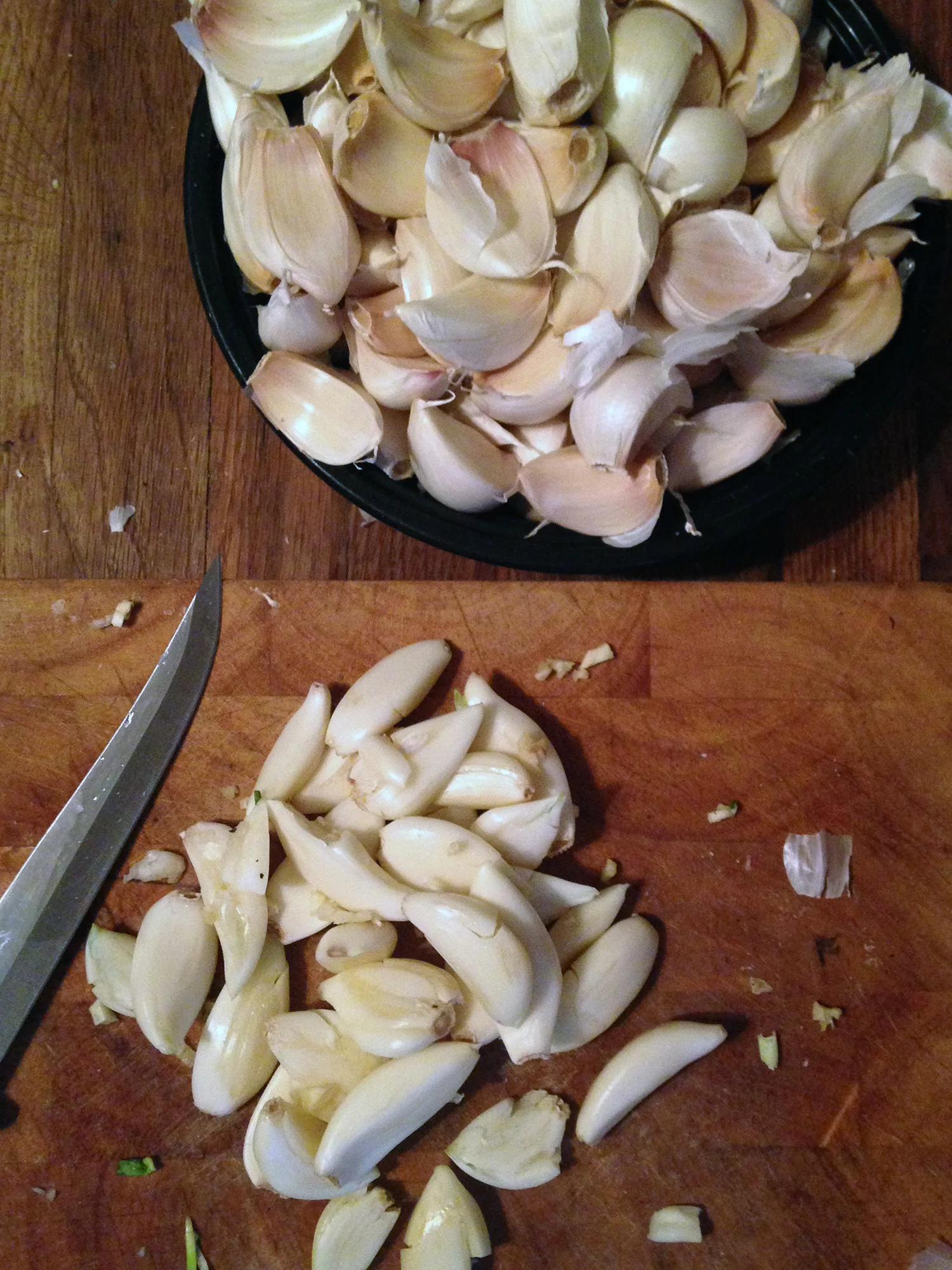
Garlic is a member of the Allium family, as are all onions. While there are several types of garlic, most of what is grown in the Southern Piedmont is called soft neck garlic. This refers to the lack of a central flower scape coming from the bulb. That scape makes the neck “hard”. If you cook with garlic, you know it forms a bulb of several individual cloves. These cloves are separated for use in cooking, and you separate them for planting as well. Plant them unpeeled, root end down. Plant them about 1” deep, and about 6-8” apart. Rows should be at least 12” apart, but I usually make my rows 18”-24” to make it easier to cultivate and weed. Needing loamy, well-drained soils, raised beds or raised rows with lots of compost are a great place to plant garlic. Fall planted garlic gets a light mulch to protect it from the wide variations in temperature that we often experience in winter. Normally I use leaves, but wheat straw is OK, too. Before you ask, pine needles will work, but I personally don’t like using them. (That’s another subject I’ll cover some other time.) let them grow on through the winter, with harvest next Spring. Elephant garlic is a different type, with a bigger, milder tasting clove. Plant it a little farther apart (9-10”) and stay with the 18-24” row spacing.

alliums 2.jpg

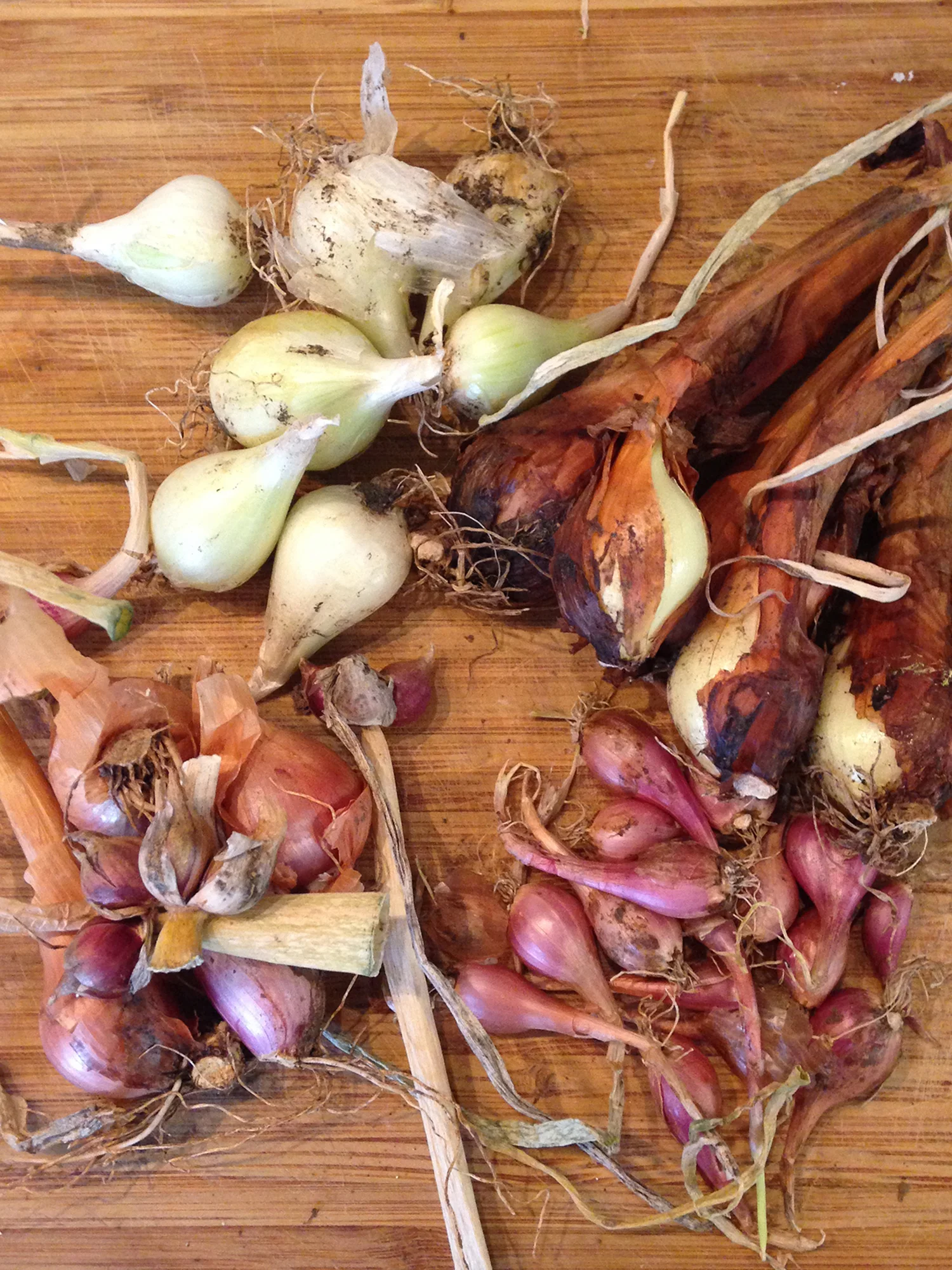
There are a few types of perennial/multiplier onions that are hardy old varieties that your parents and grandparents may have planted. Potato onions, walking onions, bunching onions, and shallots all multiply from a single set, or bulb. You’ll need to separate the individual onion bulbs in order to plant them. Like all the Alliums, they thrive in raised beds/rows with lots of compost. Plant the individual bulbs in mid-late Fall, spacing them 10-12” apart. If you are planting in long rows, give yourself plenty of room to weed and cultivate. Depending on the method of cultivation, I’d stick with 18-24” between rows. Bunching onions are grown from seed, and are great mild onions to use in salads and raw recipes.  

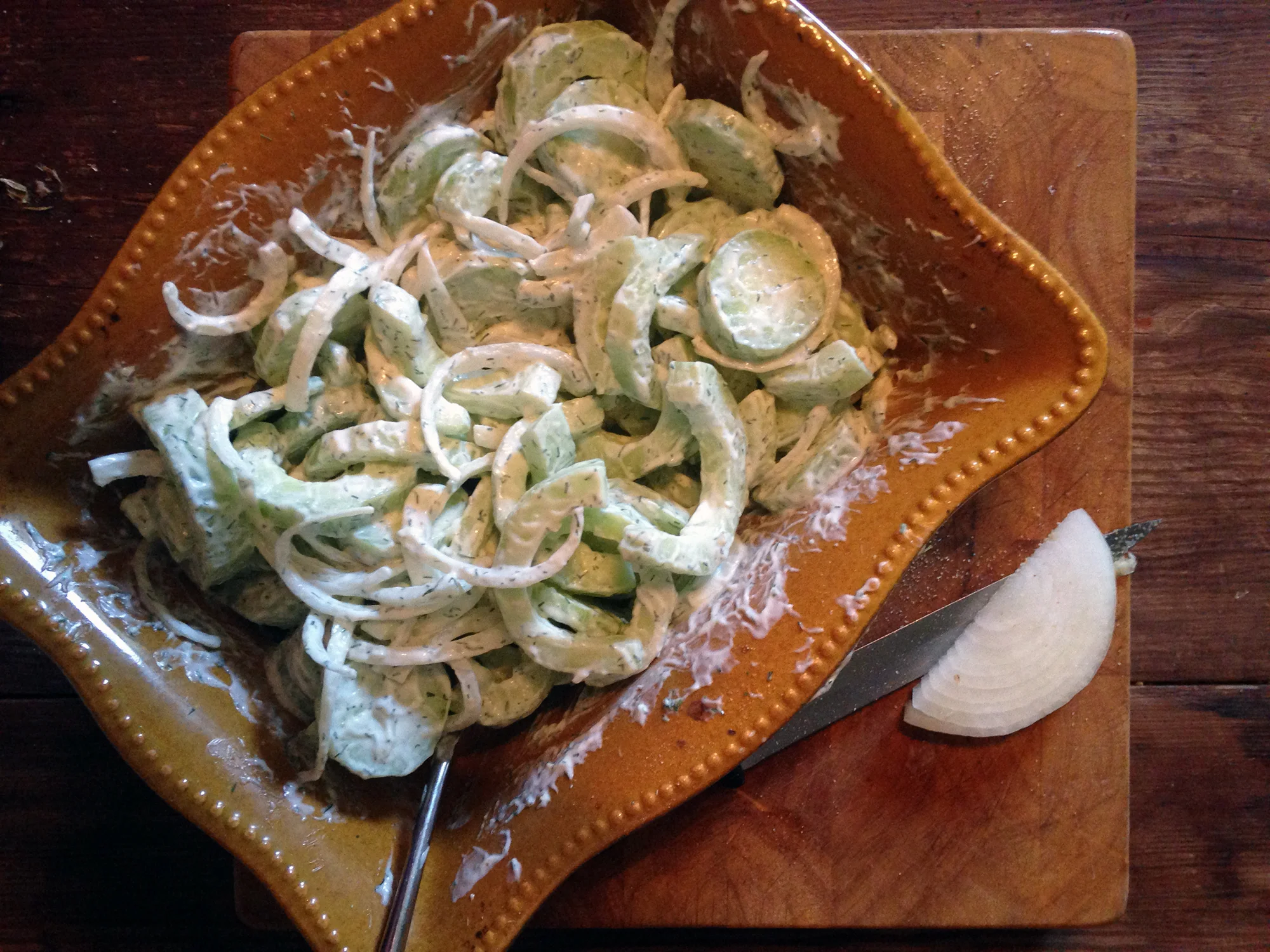
Most of you will be more familiar with onion sets, or small onion plants that have been grown out and harvested for later planting. Usually available in red, white, or yellow varieties, they can be planted in both Fall and Spring. I’d recommend doing both to give yourself a longer harvest. Plant your sets in those compost-rich beds or rows on much tighter spacing, even 3-4” apart. As they grow, you can pull every other one and use it in your cooking. Run your rows 18-24” for ease of cultivation. I usually give these onions a bit of slow-release fertilizer as they are starting to grow again in the Spring. They seem to need a little more water during the growing season, too.

onion salad.jpg

Plants and seeds are available for onions, too. I prefer to plant those in the Spring. They seem to do better if you avoid the cold temps. Growing and Spacing for most of them is the same as the other onions, but seeded onions can be planted closely, and the thinnings used in salads.

I mentioned early on that onions are very nutritious. While some amazing claims are made, some basic facts are onions are high in Vitamin C and antioxidants, low in calories, and high in fiber. That pungent flavor works with lots of other foods, from veggies to red meats. They are used in all kinds of cultures, and can be adapted for almost any dish. For cooks on a budget, a little onion can go a long way.

Even if you don’t want to plant anything else this year, you can still get started on next spring’s plantings with some onions and garlic.  Give some of them a try!

Jeff Rieves reminds you to enjoy your garden, because THAT’S what makes you a Successful Gardener!!

Don't Miss Bee-haven

Photo by Cyma Shapiro

Photo by Cyma Shapiro

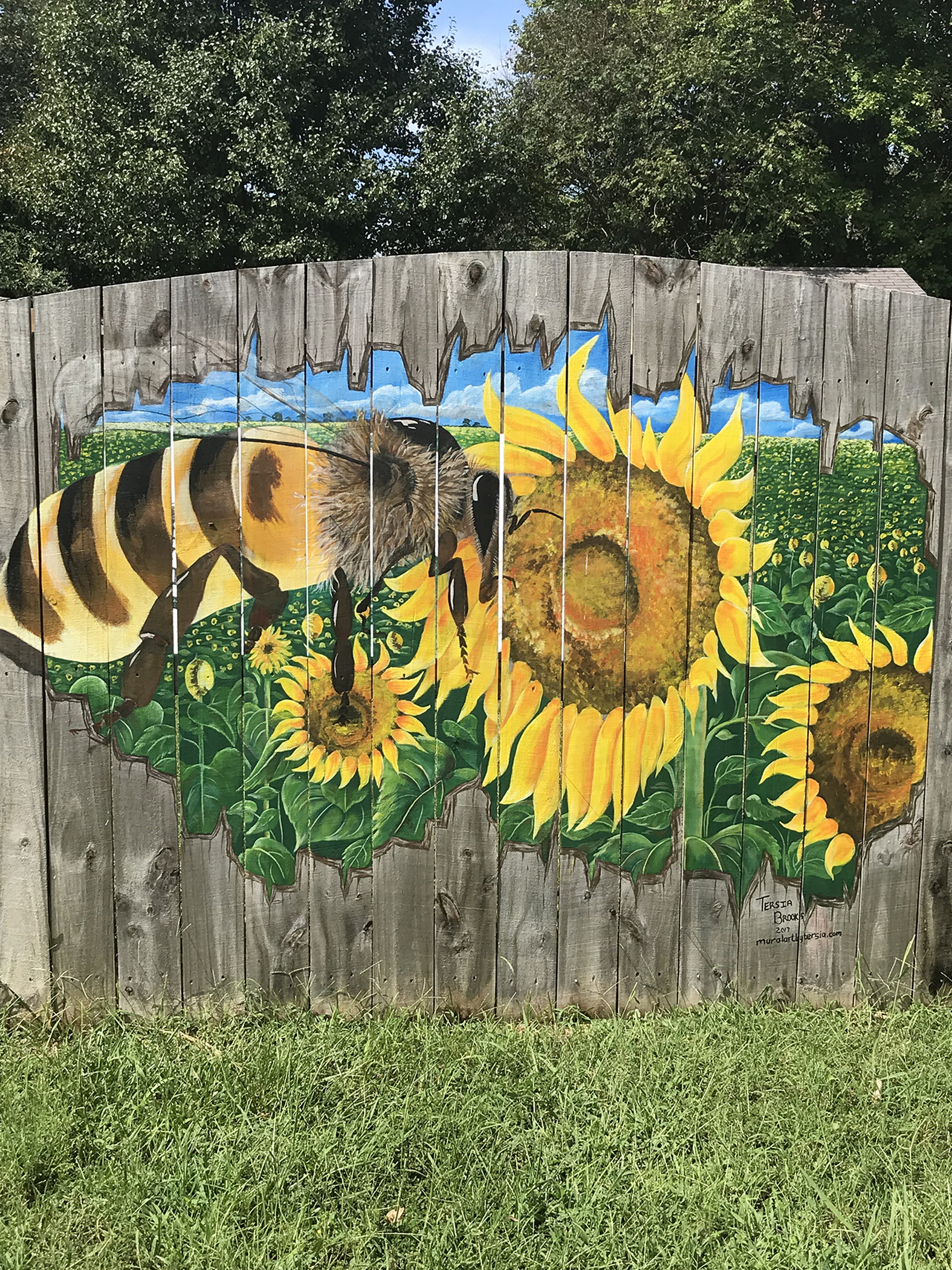
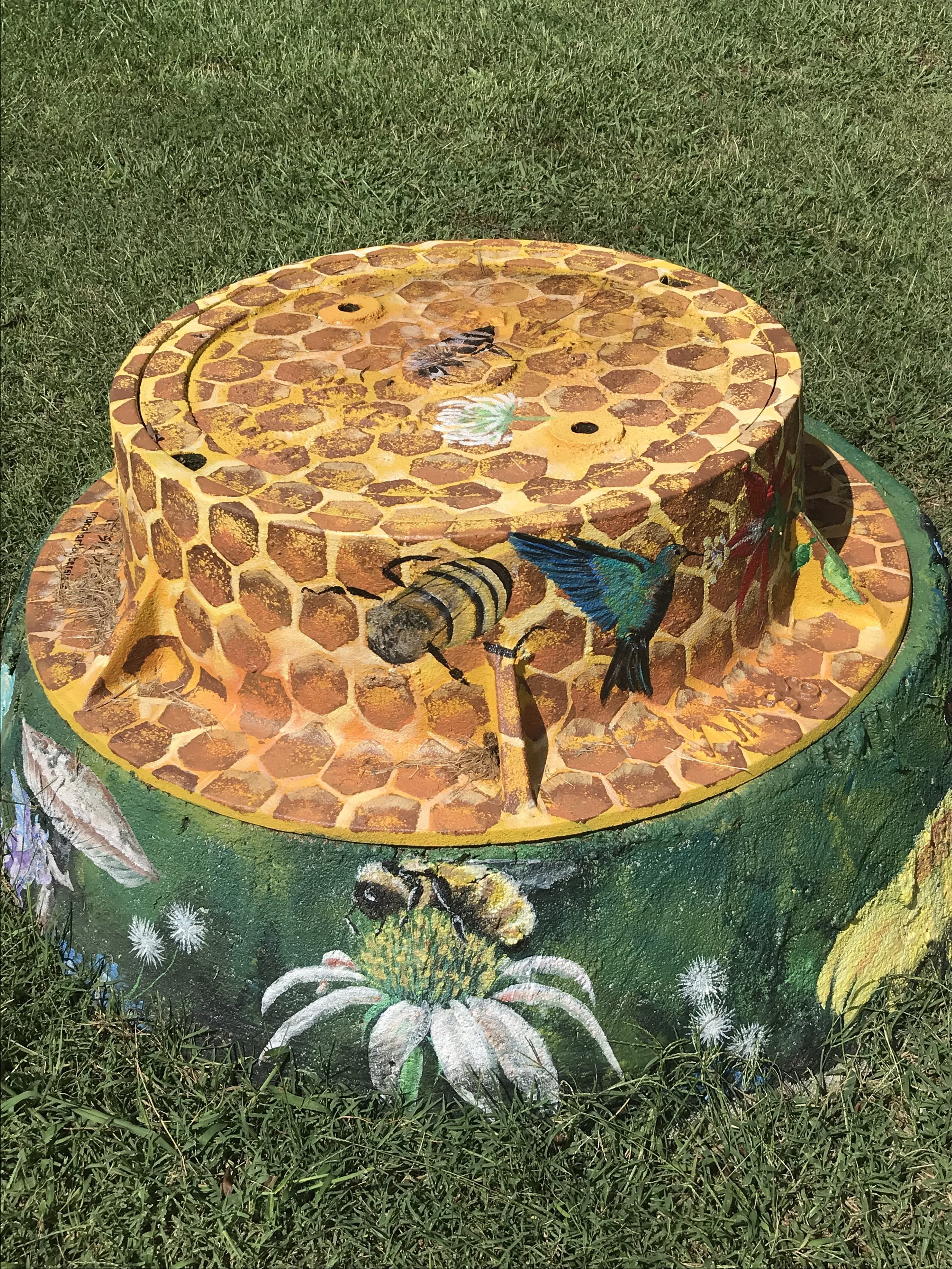
While scouting Little Free Libraries, this roving reporter found one with a particularly stunning backdrop, a mural of sunflowers painted on the homeowner's fence. The mural “Bee Haven,” 1718 Privette Road, was created by Indian Trail artist Tersia Brooks whose Matthews-public artworks can be found on the obelisk at Country Place Park on South Trade Street and a turtle painting on a storm drain in Four Mile Creek Greenway.

According to Tersia, “Bee Haven” represents what someone would see as if there was a hole in the fence, and is a nod to the pollinator passion of its owners and many others in Matthews, NC.

Tersia related that as she took a photo of her artistic creation for her portfolio, a butterfly landed on the biggest sunflower in the piece. “I loved it,” she said. “It made me really, really happy….. If a butterfly landed on it, it must really be a beautiful sunflower.”

Photo by Cyma Shapiro

Photo by Cyma Shapiro

Join the Alliuminati

Onions and garlic are easy to grow,

overwinter in our mild climate,

and are powerhouses of nutrition and healing.

alliums.jpg

This time of year is a really good time to plant lots of perennial plants, everything from trees to shrubs to flowers and vegetable plants. Planting in this cooler season gives your plants weeks of root growing before the warming temperatures bring on the riot of growth that is Spring. So cool-season planting is the start of your 2019 garden!

Let’s start that planting with onions and garlic! These plants are easy to grow, overwinter in our mild climate, and are powerhouses of nutrition and healing. There are several types and varieties to choose from, as well.

Garlic is a member of the Allium family, as are all onions. While there are several types of garlic, most of what is grown in the Southern Piedmont is called soft neck garlic. This refers to the lack of a central flower scape coming from the bulb. That scape makes the neck “hard”. If you cook with garlic, you know it forms a bulb of several individual cloves. These cloves are separated for use in cooking, and you separate them for planting as well. Plant them unpeeled, root end down. Plant them about 1” deep, and about 6-8” apart. Rows should be at least 12” apart, but I usually make my rows 18”-24” to make it easier to cultivate and weed. Needing loamy, well-drained soils, raised beds or raised rows with lots of compost are a great place to plant garlic. Fall planted garlic gets a light mulch to protect it from the wide variations in temperature that we often experience in winter. Normally I use leaves, but wheat straw is OK, too. Before you ask, pine needles will work, but I personally don’t like using them. (That’s another subject I’ll cover some other time.) let them grow on through the winter, with harvest next Spring. Elephant garlic is a different type, with a bigger, milder tasting clove. Plant it a little farther apart (9-10”) and stay with the 18-24” row spacing.

alliums 2.jpg

There are a few types of perennial/multiplier onions that are hardy old varieties that your parents and grandparents may have planted. Potato onions, walking onions, bunching onions, and shallots all multiply from a single set, or bulb. You’ll need to separate the individual onion bulbs in order to plant them. Like all the Alliums, they thrive in raised beds/rows with lots of compost. Plant the individual bulbs in mid-late Fall, spacing them 10-12” apart. If you are planting in long rows, give yourself plenty of room to weed and cultivate. Depending on the method of cultivation, I’d stick with 18-24” between rows. Bunching onions are grown from seed, and are great mild onions to use in salads and raw recipes.  

Most of you will be more familiar with onion sets, or small onion plants that have been grown out and harvested for later planting. Usually available in red, white, or yellow varieties, they can be planted in both Fall and Spring. I’d recommend doing both to give yourself a longer harvest. Plant your sets in those compost-rich beds or rows on much tighter spacing, even 3-4” apart. As they grow, you can pull every other one and use it in your cooking. Run your rows 18-24” for ease of cultivation. I usually give these onions a bit of slow-release fertilizer as they are starting to grow again in the Spring. They seem to need a little more water during the growing season, too.

onion salad.jpg

Plants and seeds are available for onions, too. I prefer to plant those in the Spring. They seem to do better if you avoid the cold temps. Growing and Spacing for most of them is the same as the other onions, but seeded onions can be planted closely, and the thinnings used in salads.

I mentioned early on that onions are very nutritious. While some amazing claims are made, some basic facts are onions are high in Vitamin C and antioxidants, low in calories, and high in fiber. That pungent flavor works with lots of other foods, from veggies to red meats. They are used in all kinds of cultures, and can be adapted for almost any dish. For cooks on a budget, a little onion can go a long way.

Even if you don’t want to plant anything else this year, you can still get started on next spring’s plantings with some onions and garlic.  Give some of them a try!

Jeff Rieves reminds you to enjoy your garden, because THAT’S what makes you a Successful Gardener!!

Morning Minute: October 19, 2018

News About Town:  The National Police Bloodhound Association is bringing the real life paw patrol to town Sunday, October 21 through Thursday, October 25. K-9 unit handlers from all over the country will use Matthews as their training grounds for those five days.

IMG_9904.JPG

News Around Town: All these beautiful old hardwood trees shed a lot of branches and twigs during the last two storms. Republic and the public works department are still working diligently to get everything picked up. They’ve got their a-game on, the Town Manager on stick duty, and the big trucks revved. Wave hi and say thank you as they continue clean-up duty. In the meantime maybe a fire pit and s’mores are in order? You know, for the sake of the community.

Some Fun Things: Don’t forget the Mt Moriah BBQ Fundraiser today and tomorrow, the final performances of The Hundred Dresses, and the special menu at The Bellé Grille for Charlotte Black Restaurant Week.